Hailey Thompson

Oxalis

ADAPTABLE SEATING FOR OUTDOOR EDUCATION
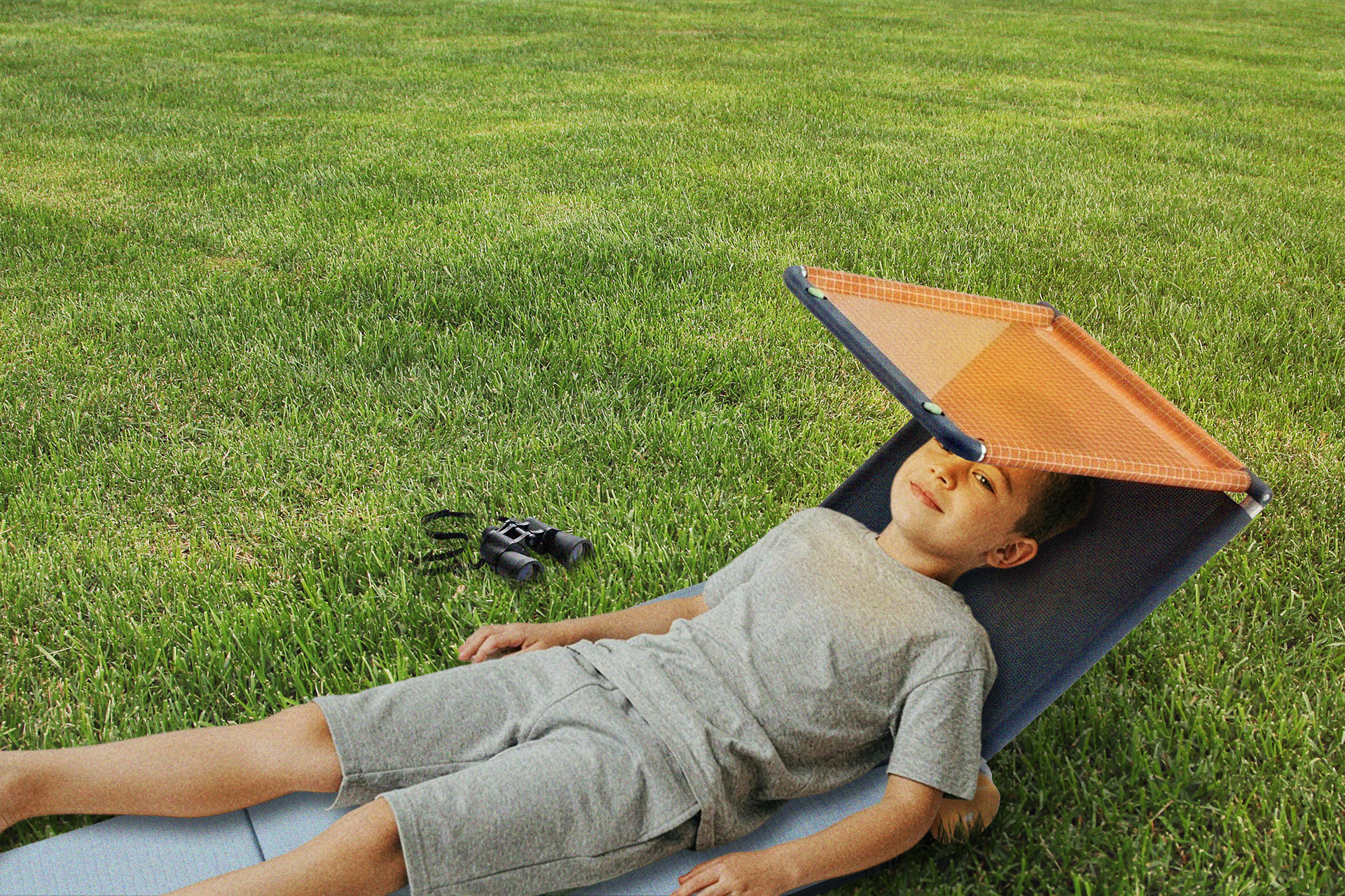
A portable outdoor seat for children, designed to adapt between individual and group use, supporting comfort, flexibility, and engaging experiences in natural environments.

Sept 2025 – May 2026

Research, user testing, manufacturing

COLLABORATION WITH RVCA
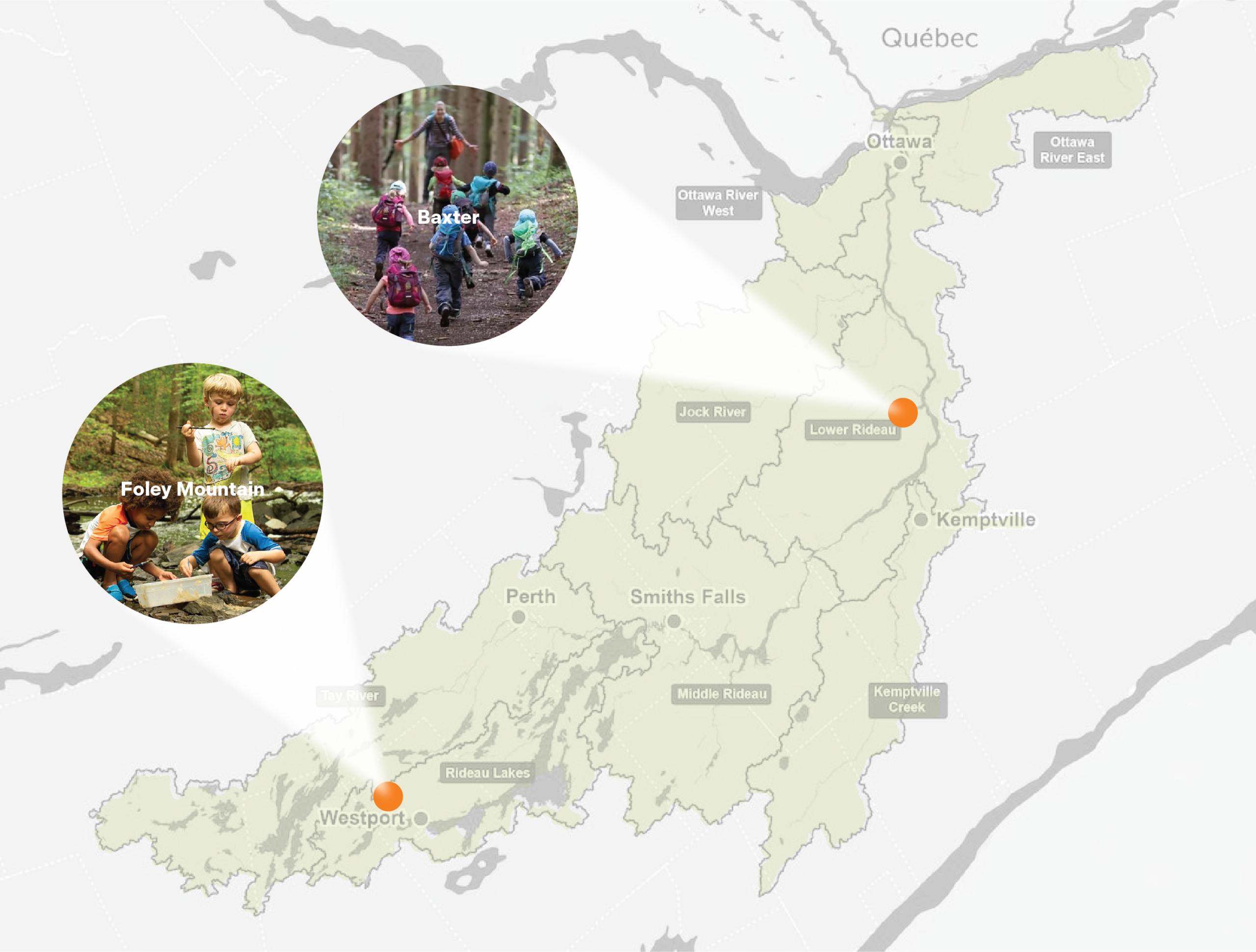
The Rideau Valley Conservation Authority (RVCA) is an organization that protects and manages natural areas across the Rideau Valley watershed. Working alongside RVCA, I explored opportunity areas for design. 
RVCA’S MISSION STATEMENT
Maintain a thriving watershed with clean abundant water, natural shorelines, rich forests and wetlands, diverse habitat and sustainable land use that is valued and protected by all
EDUCATION PROGRAMS
RVCA, along with other conservation authorities, offers forest school, day camps and programs, that foster environmental awareness and stewardship in all ages.
OUTDOOR EDUCATION PEDEGOGY

Experiential and inquiry-based learning: Students build knowledge by engaging in actions, forming hypotheses, and testing them in real-time.

Play-based learning: Child-led play builds confidence and supports developmental skills like coordination, communication, creativity, and risk assessment.

Environment-based learning: Learning within a specific geographic and cultural context, builds a deep connection to the local environment and its history.

Collaborative learning: Outdoor learning environments function as social learning ecosystems, where students negotiate roles, share tools, build on each other’s ideas, and make sense of their surroundings together.

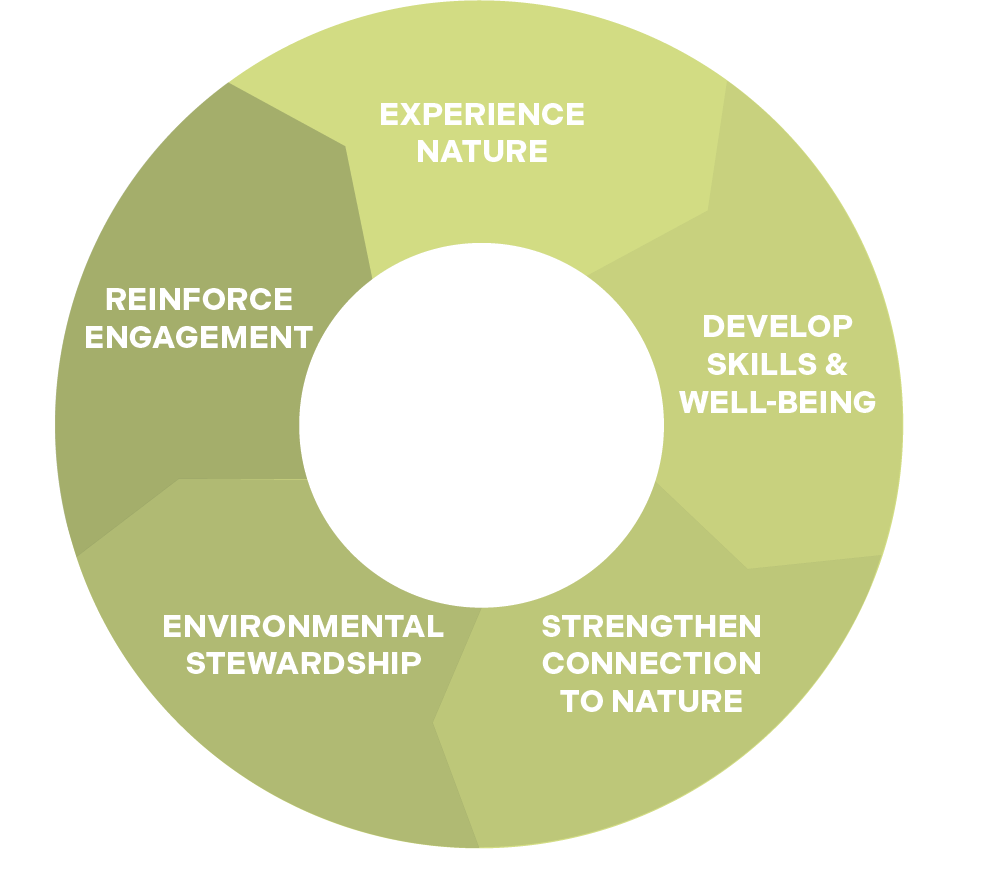
Nature connectedness is especially important for children and young people as they are increasingly disconnected from the natural world. Early positive experiences in nature shape lifelong environmental attitudes and behaviours.Type your paragraph here

WHO IS INVOLVED?

Students – Ages 6-12

Needs/Motivations:

  • Opportunities for autonomy
  • Adventure, play, exploration
  • Social connection

Challenges:

  • Fear or discomfort outdoors
  • Feeling overwhelmed/ overstimulated

STAFF – EDUCATORS / VOLUNTEERS 

Needs/Motivations:

  • Flexible activity structures 
  • Support for multi-modal learning


Challenges:

  • Managing safety and supervision while giving space for freedom
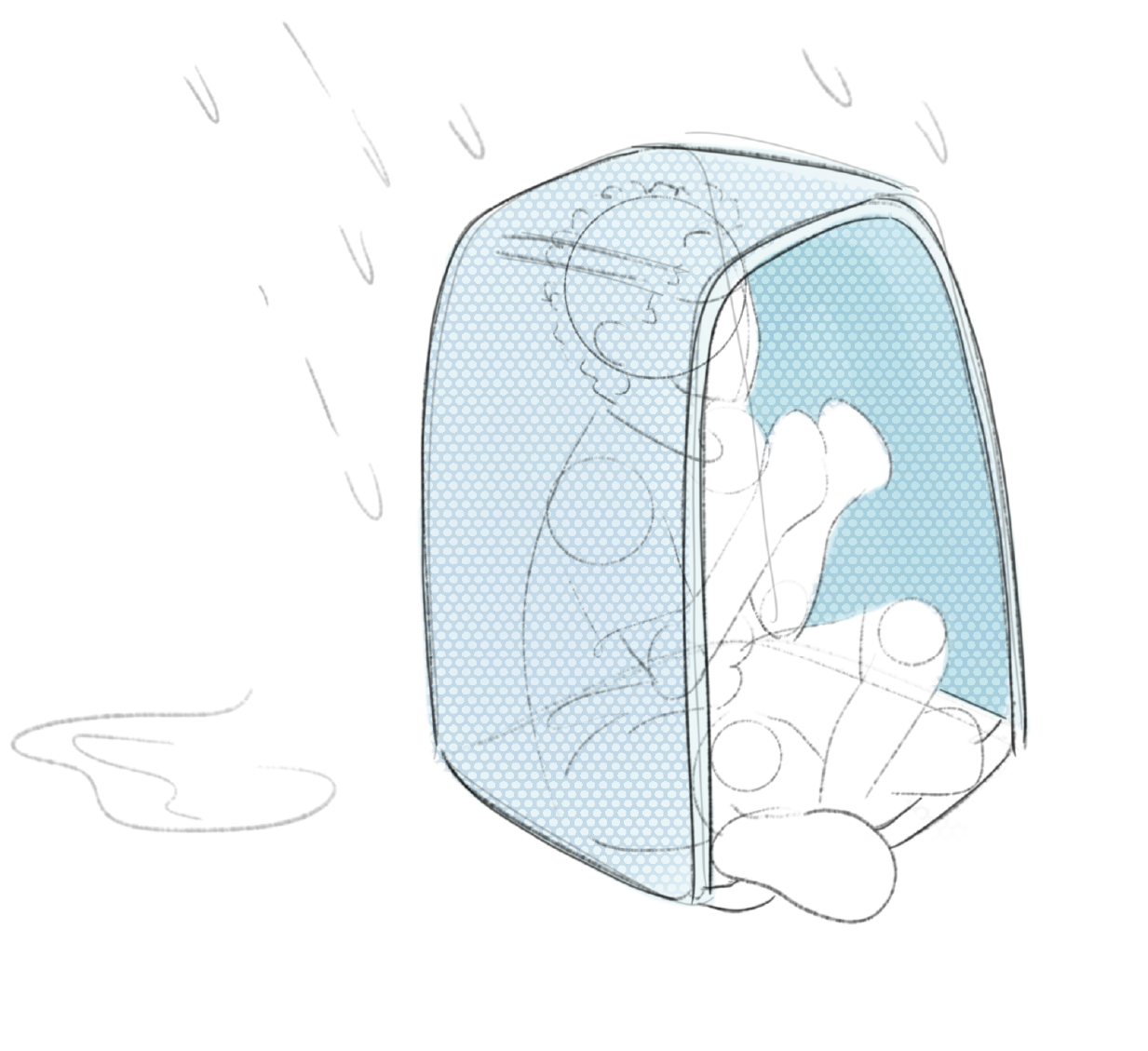
  • Adapting to weather conditions
ENVIRONMENT

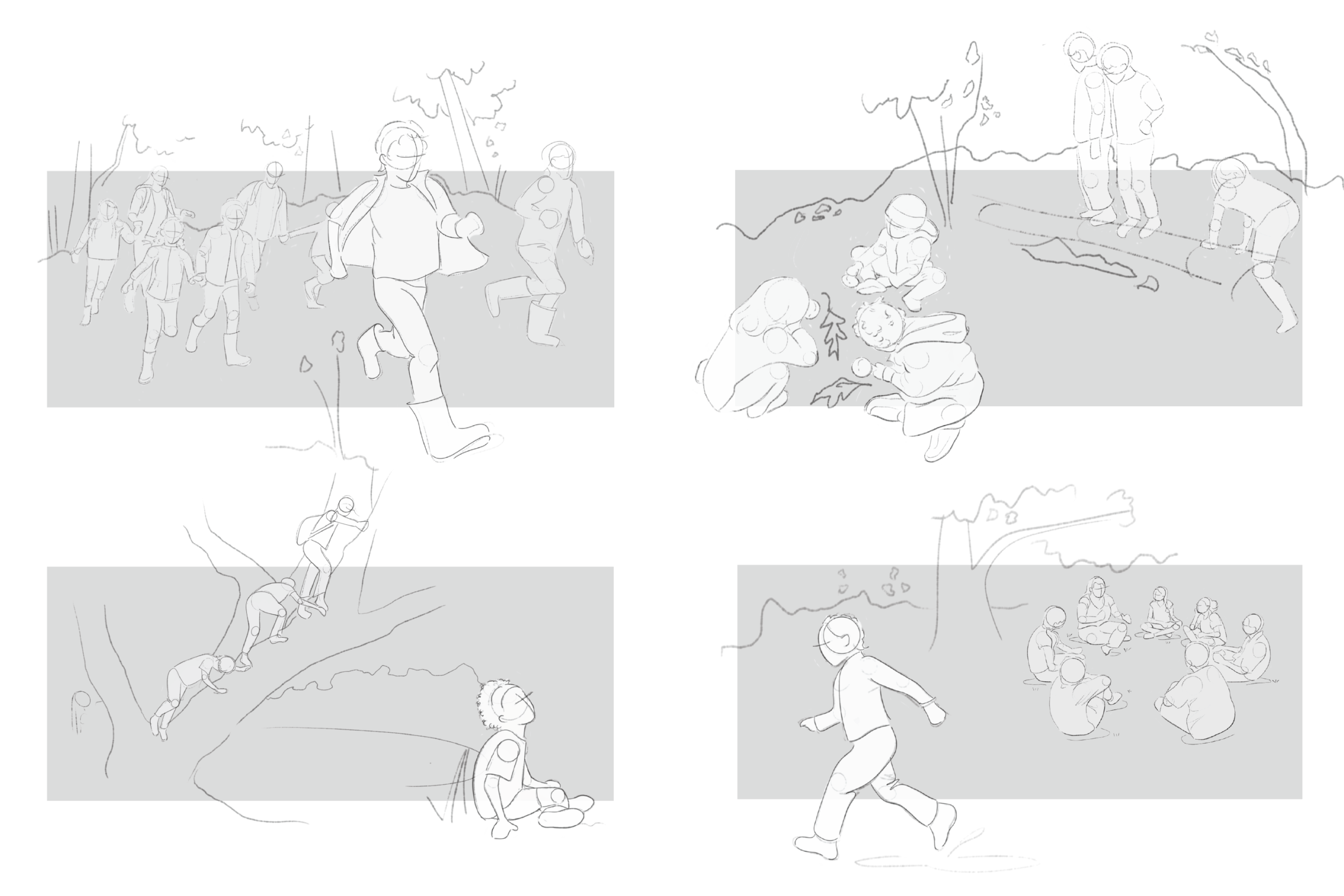
 On the move


Group and individual activities

Changing weather conditions 


Safety Priority 

FIELD RESEARCH
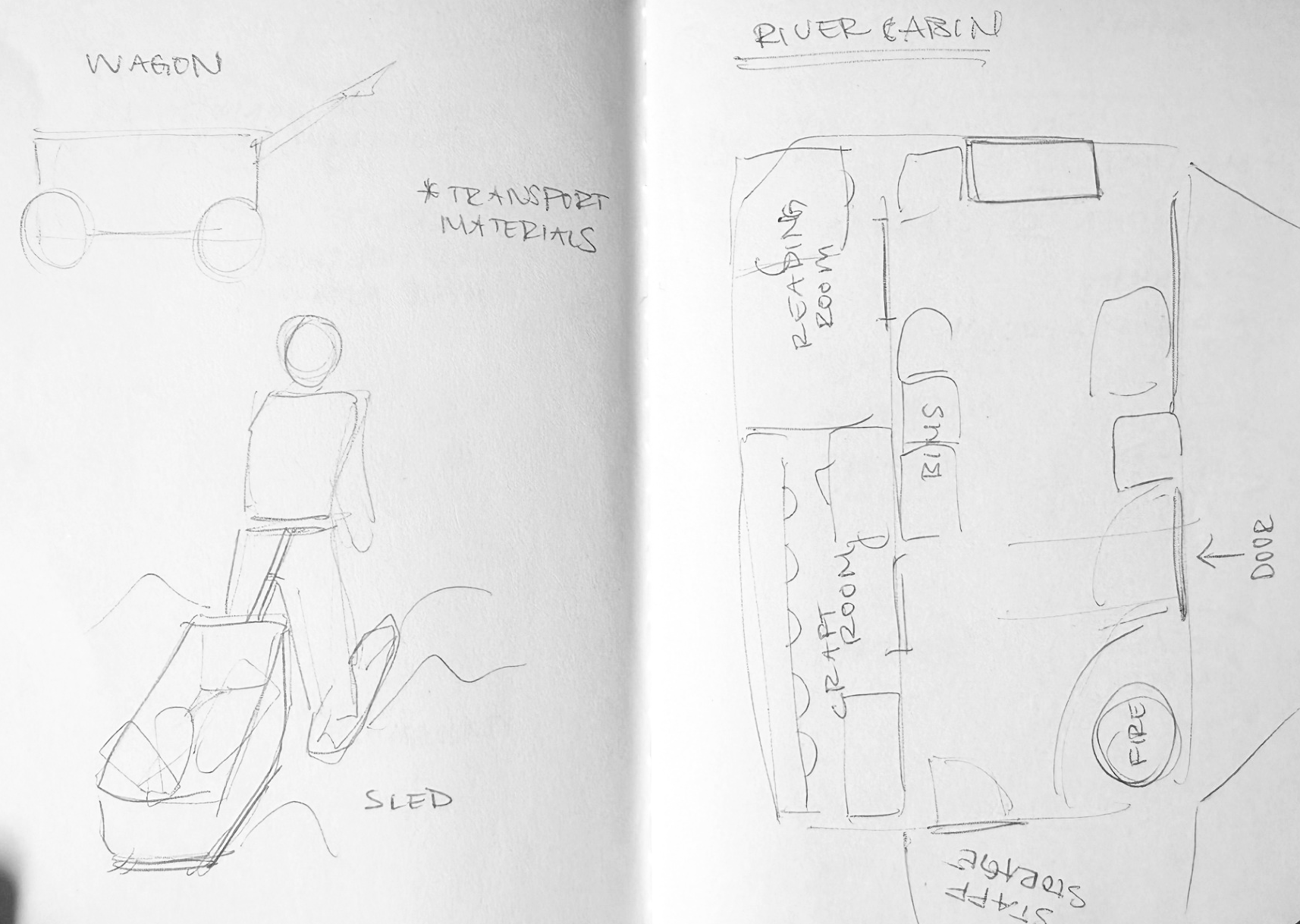
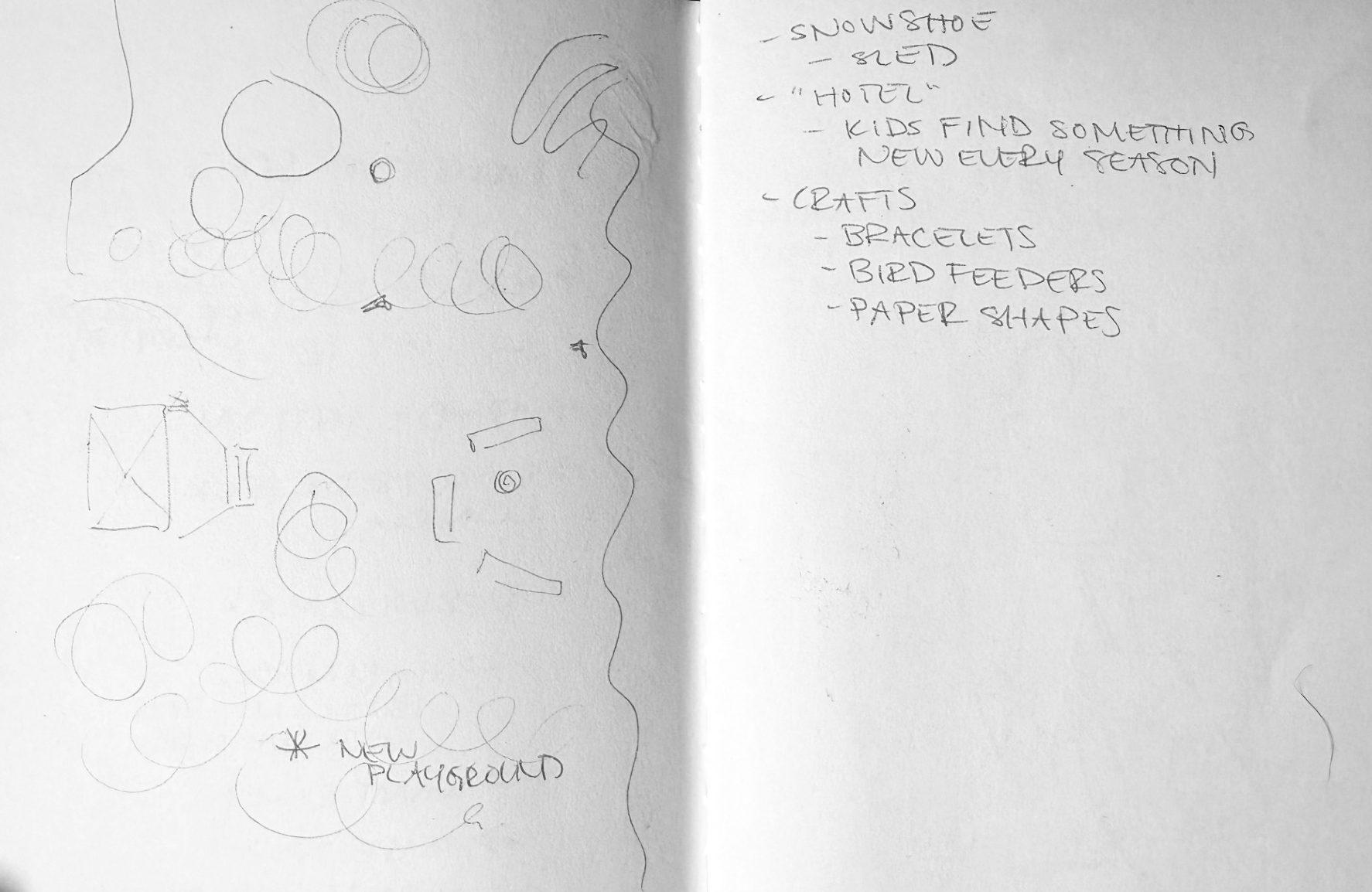
I interviewed Forest School educators and spent a full day at the school helping with activities and observing the students. This gave me firsthand insight into their behaviours, routines, challenges, and how they naturally interact with the outdoor environment.
My Day at Forest School 01/20/26

9:00AM 12:00PM 3:00PM

Planning the day, asking students what they would like to do 

Snowshoe through the forest to an open area for free play and exploration 

Lunch at River Cabin (home base) 

Crafts, wood cutting, free play outside River Cabin 

End of day – reflect on what we have learned!

EXSISTING TOOLS

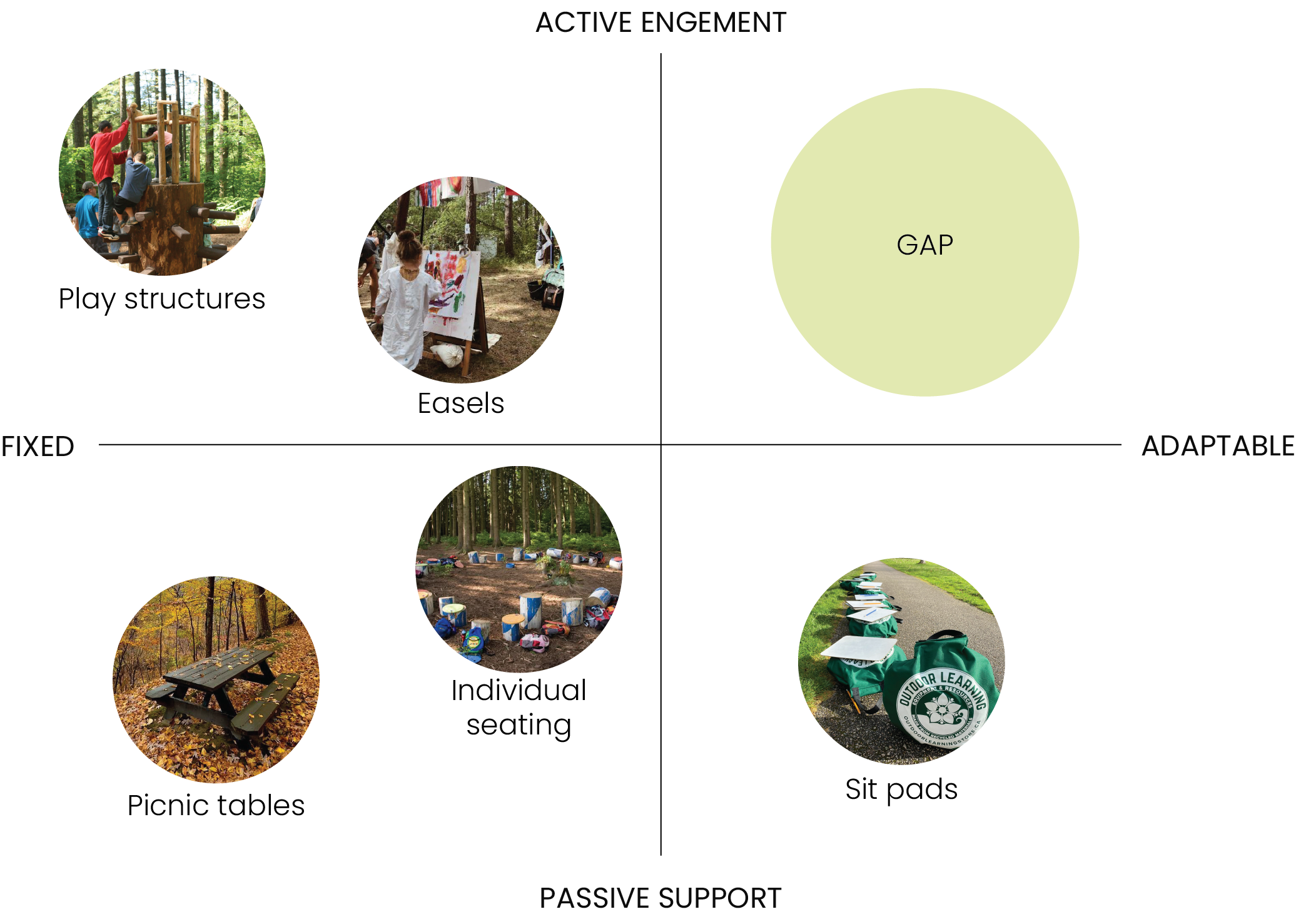
Why do many existing tools for outdoor learning feel overly structured, even though the goal is flexibility and exploration?

PROBLEM STATEMENT 

Children in outdoor learning environments lack portable, adaptable spaces for comfort and emotional regulation, making it difficult to stay focused, feel secure, and engage meaningfully with both independent and group learning.

OPPORTUNITY

There is an opportunity to design a portable, adaptive comfort zone that supports emotional wellbeing, encourages independence, and enhances learning in nature-based environments.
IDEATION

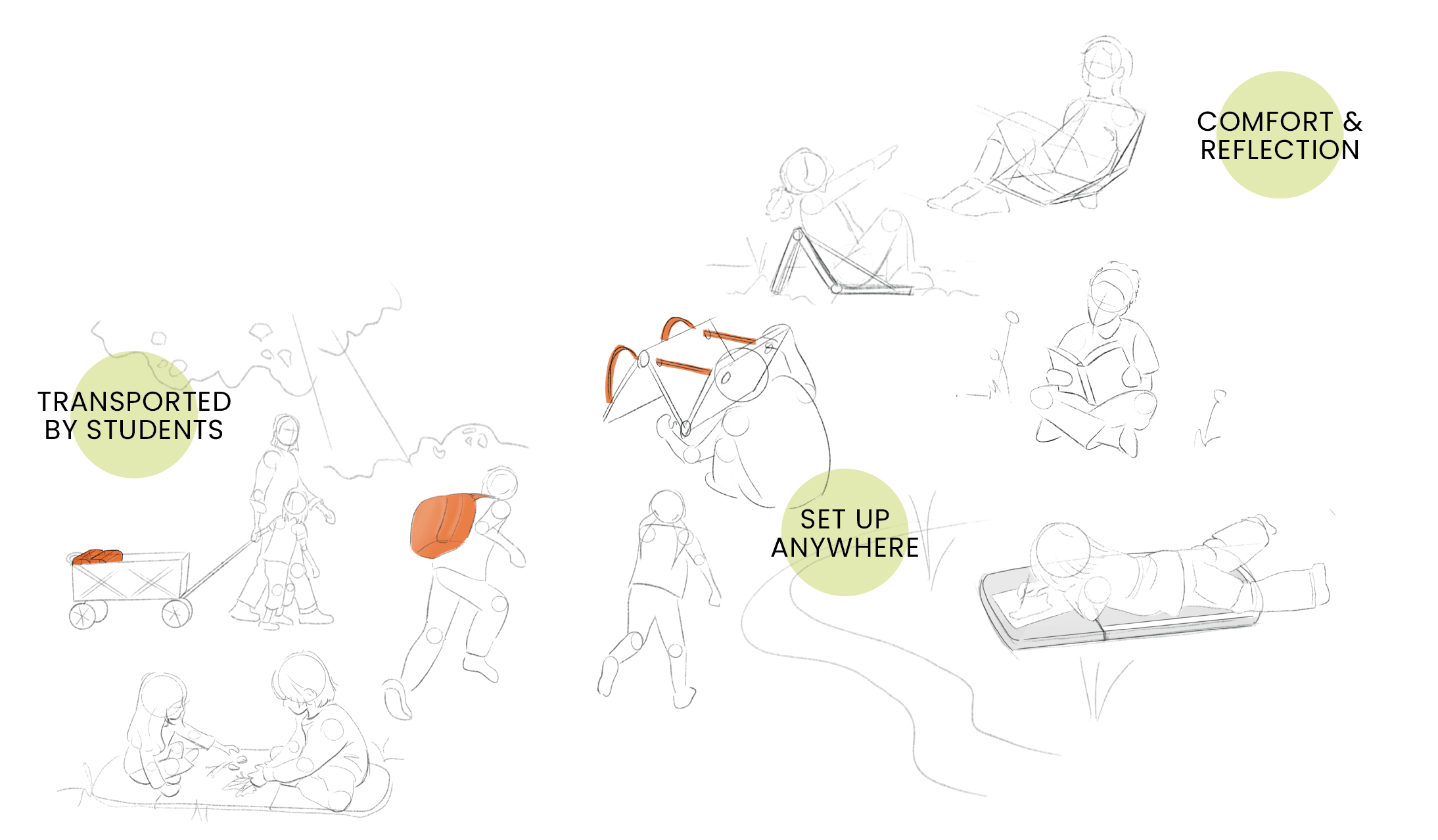
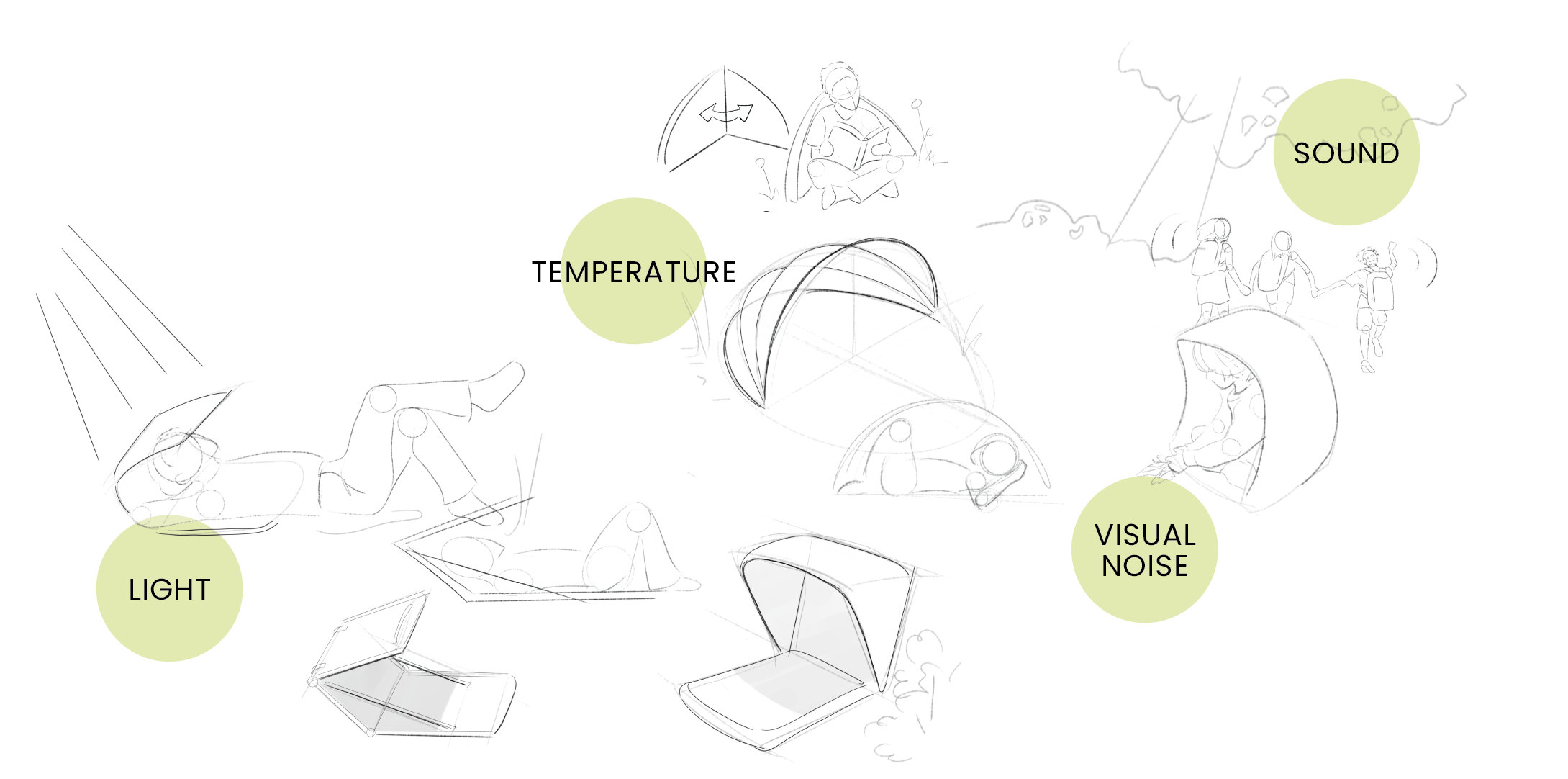
Portable seating: A portable design allows comfort to travel with students on outdoor adventures and everyday activities. Being able to set it up anywhere provides a sense of security and reassurance for both students and staff, knowing a familiar, supportive space is always available
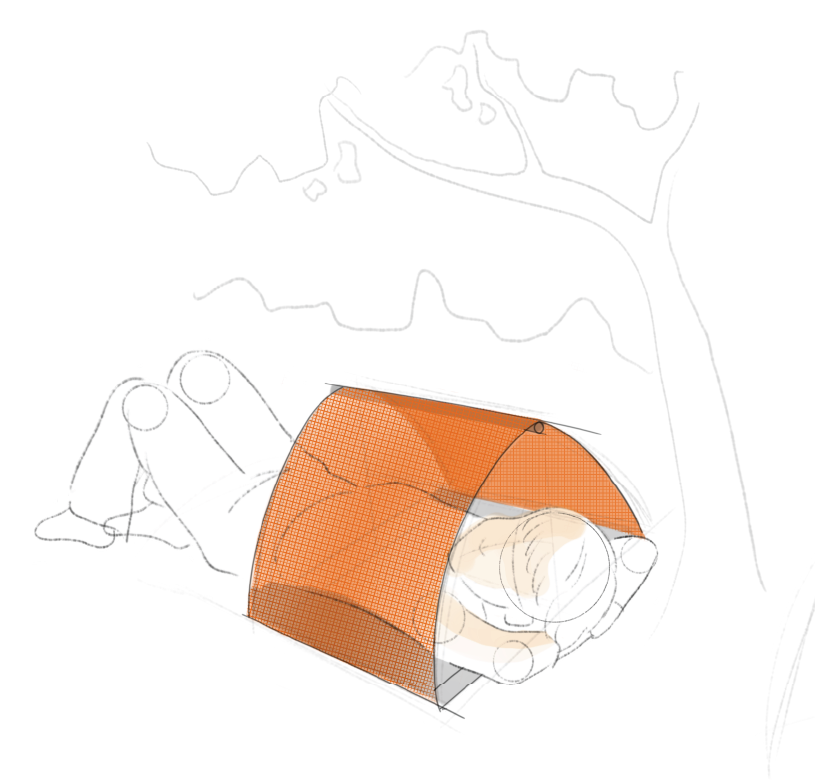
Managing overstimulating input: By integrating coverage into the design, students are given the option to step away from their surroundings, creating a moment of calm, reduced sensory input, and space for self-regulation.


Portability
Adaptability
Comfort
Portability
Adaptability
Comfort
Portability
Adaptability
Comfort
FINAL CONCEPT
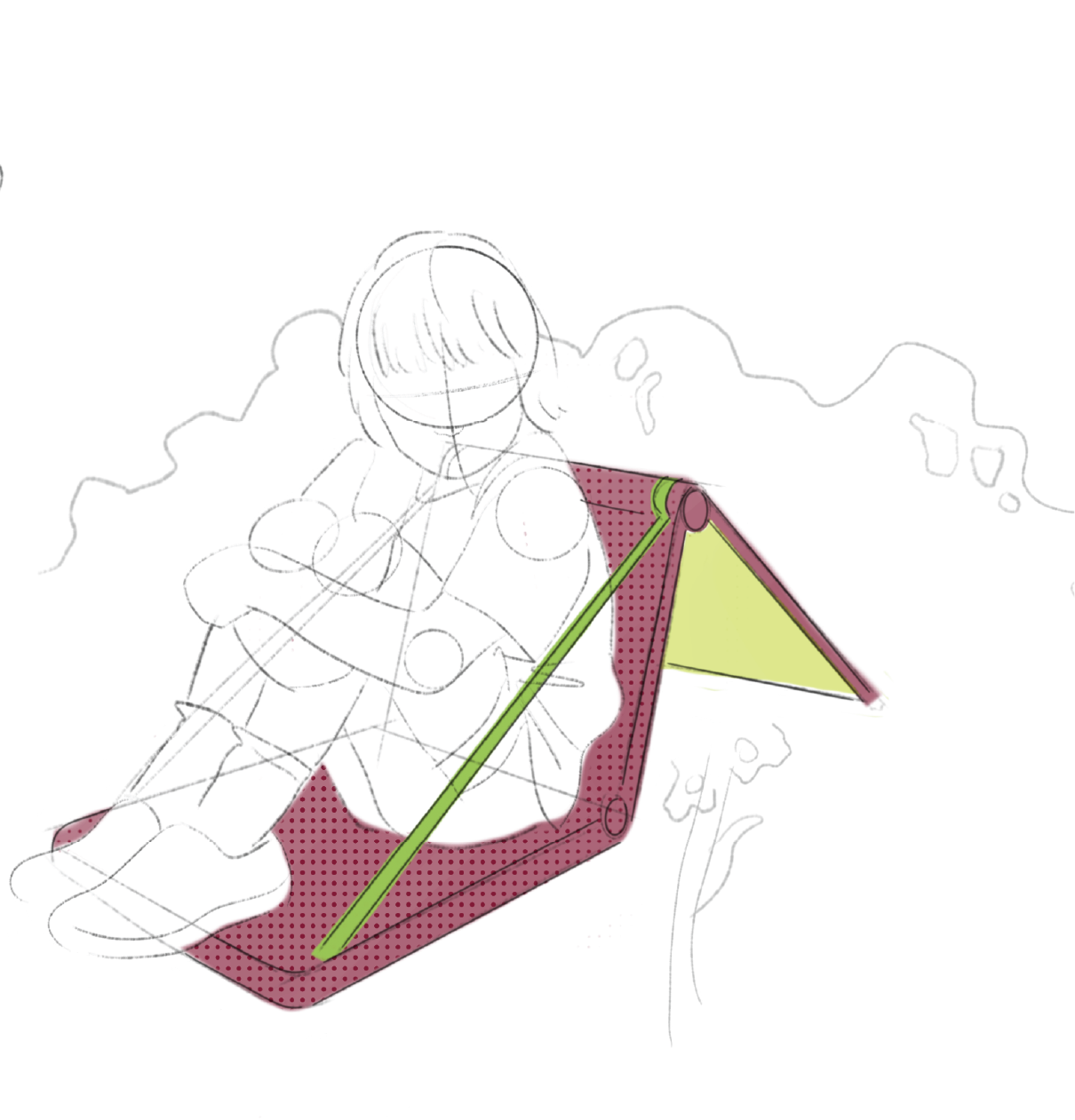
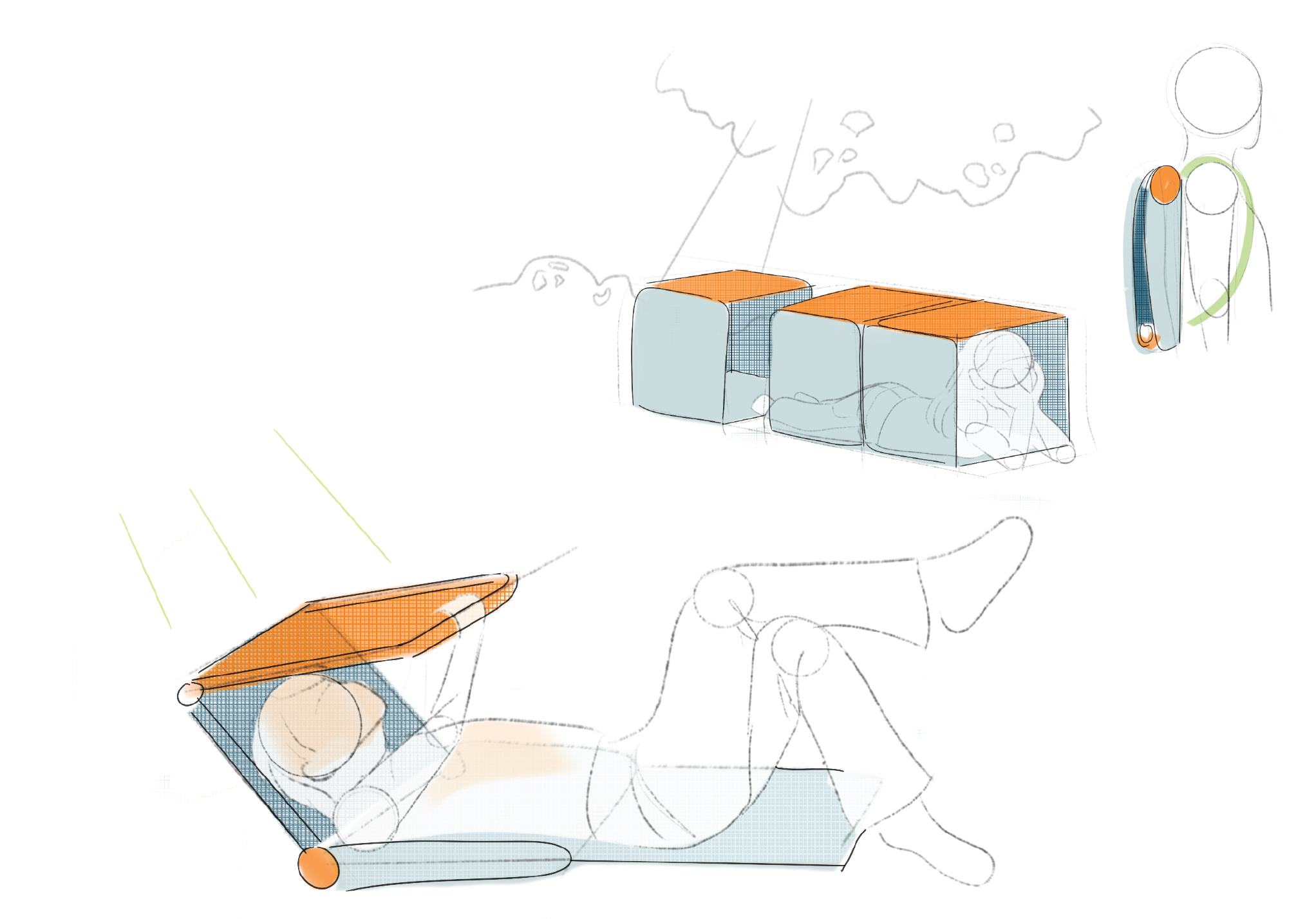
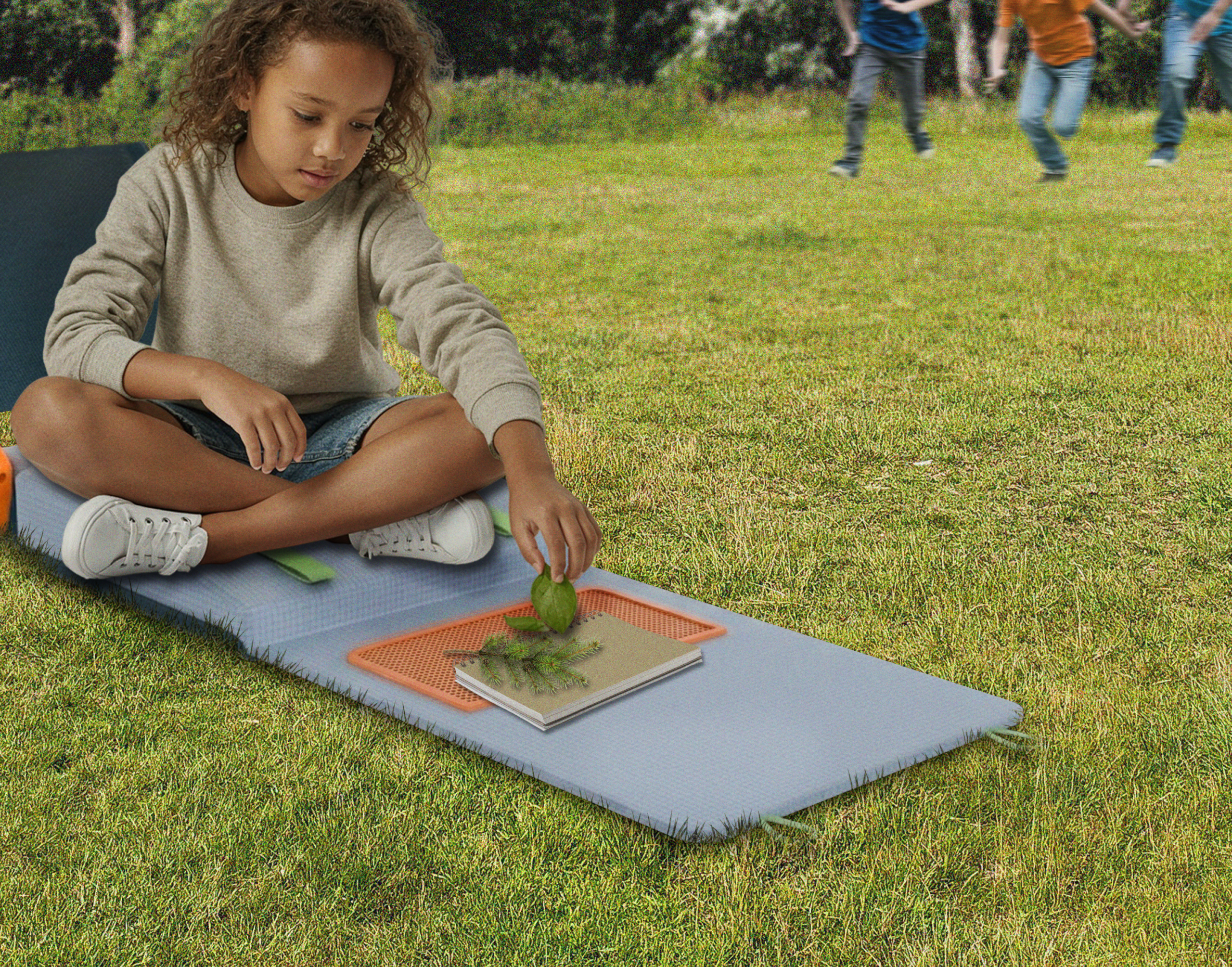
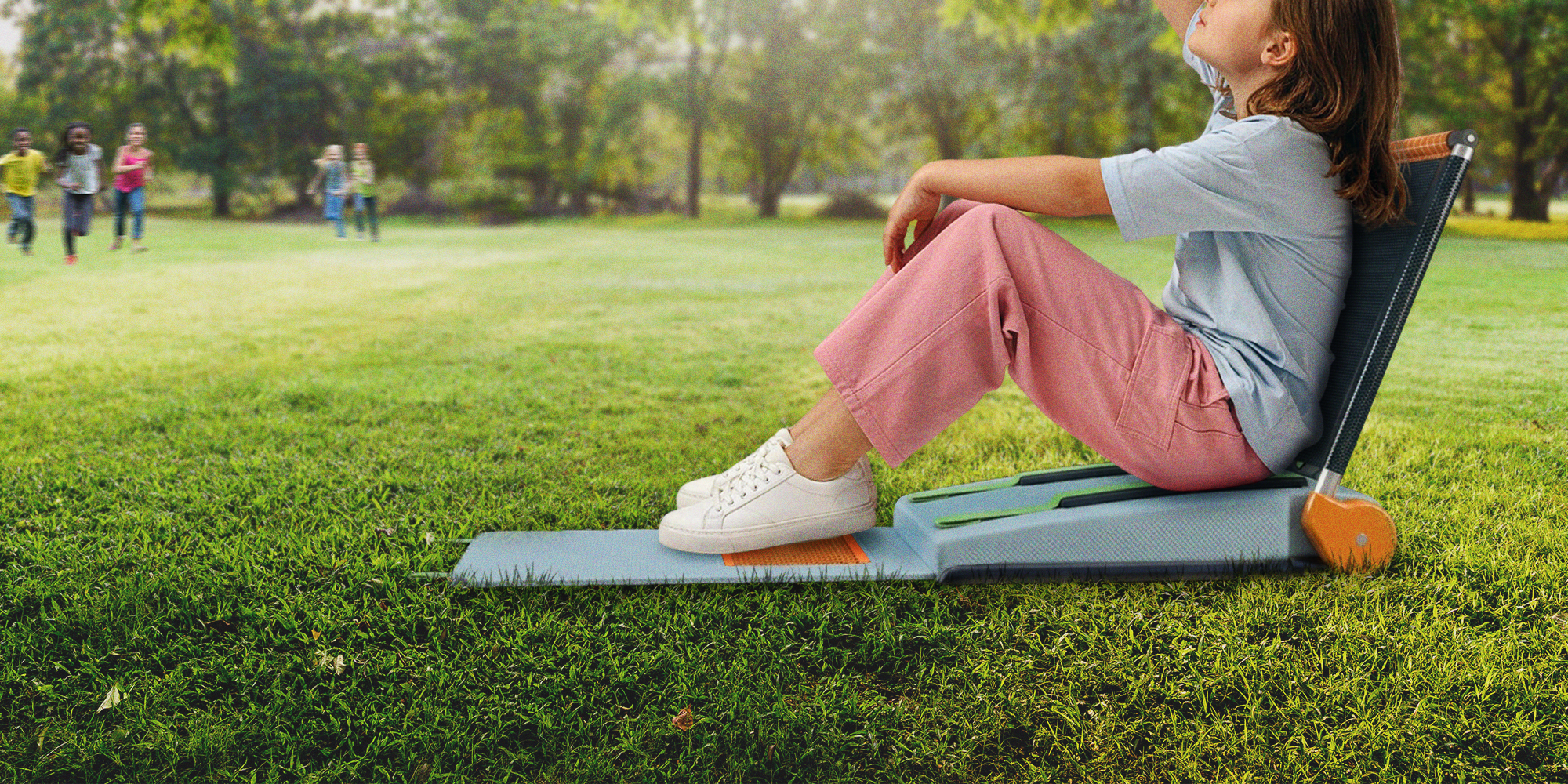
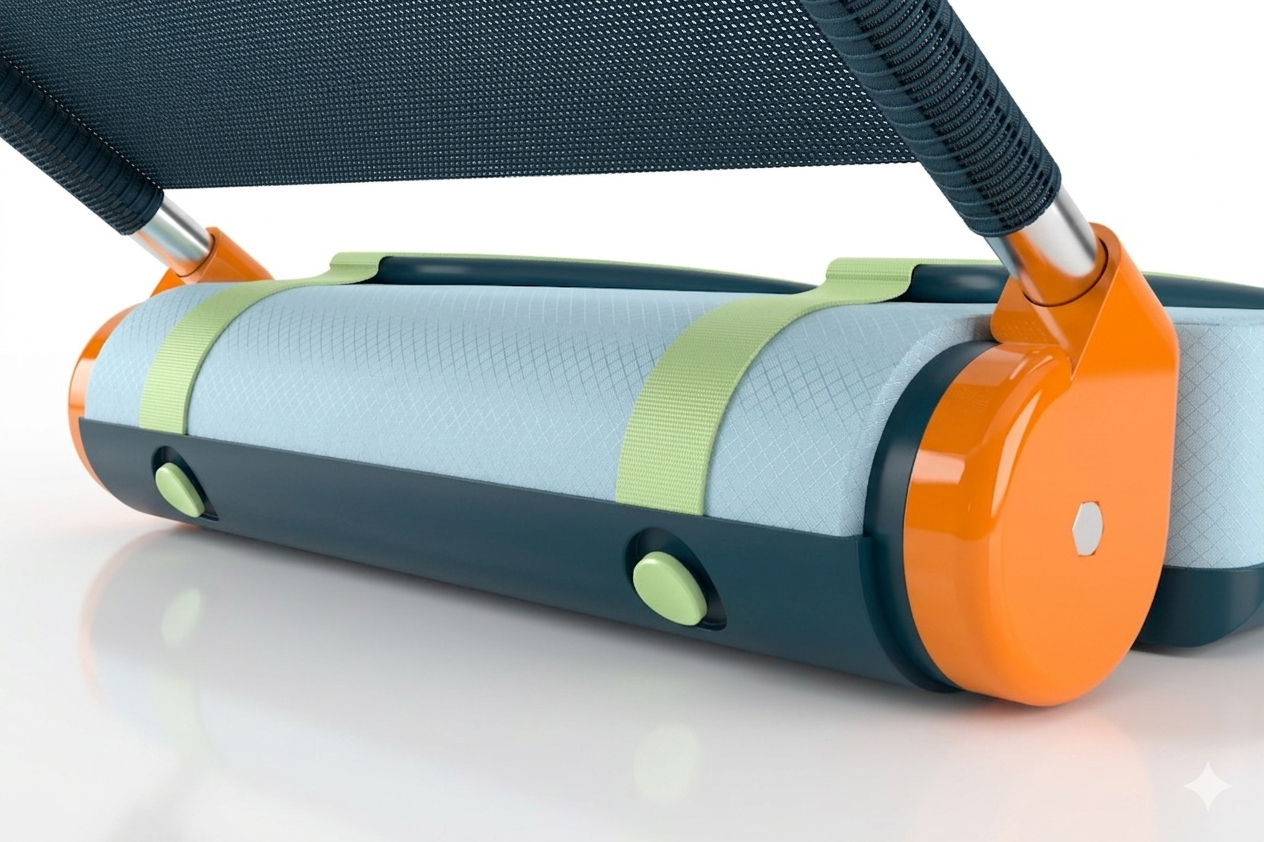
The final design is a portable, modular seat that adapts between personal reflection and group interaction, combining comfort, stability, and flexible configurations to support emotional wellbeing, independence, and playful learning outdoors.
Portability
Adaptability
Comfort
PROTOTYPING

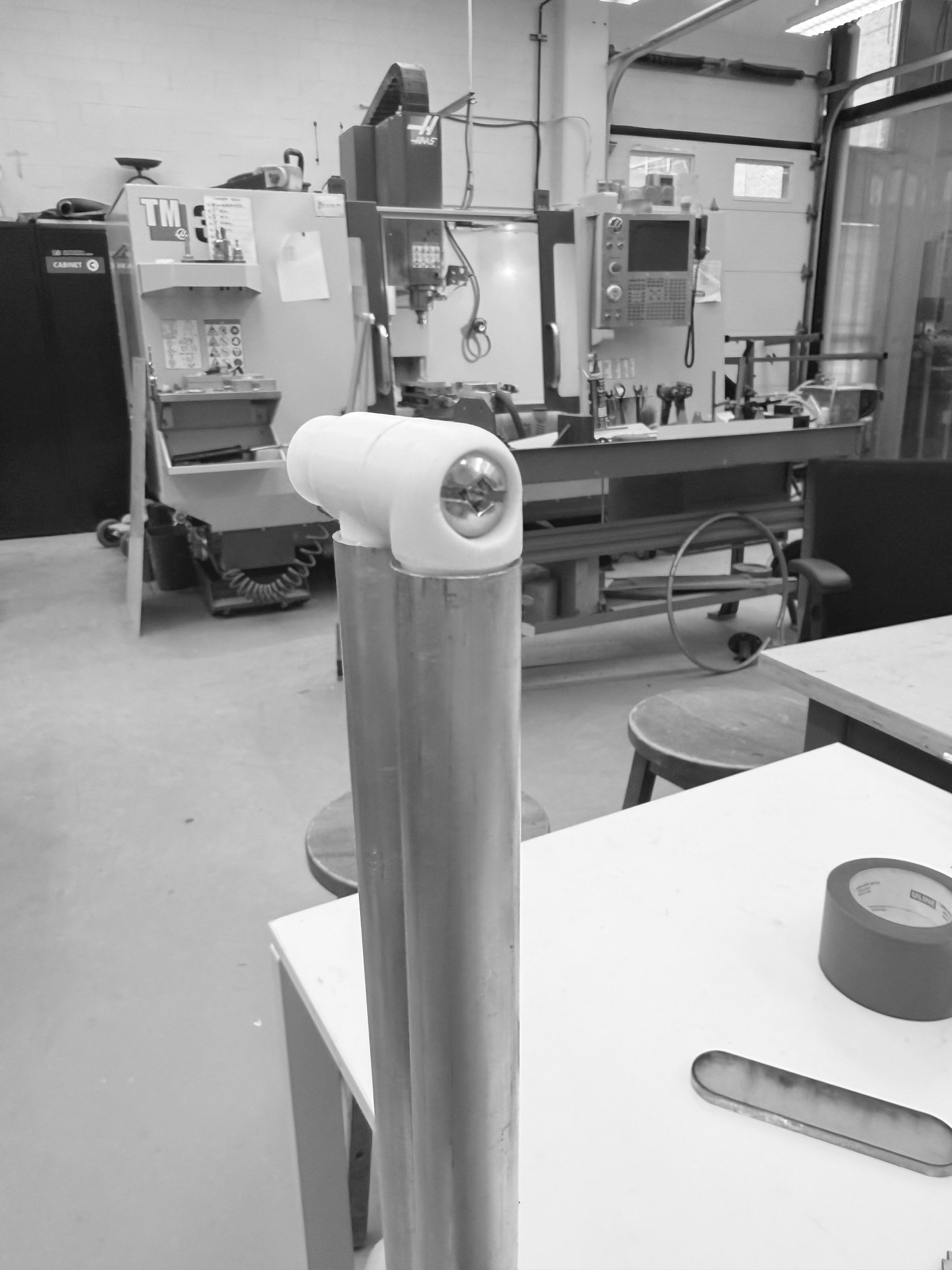
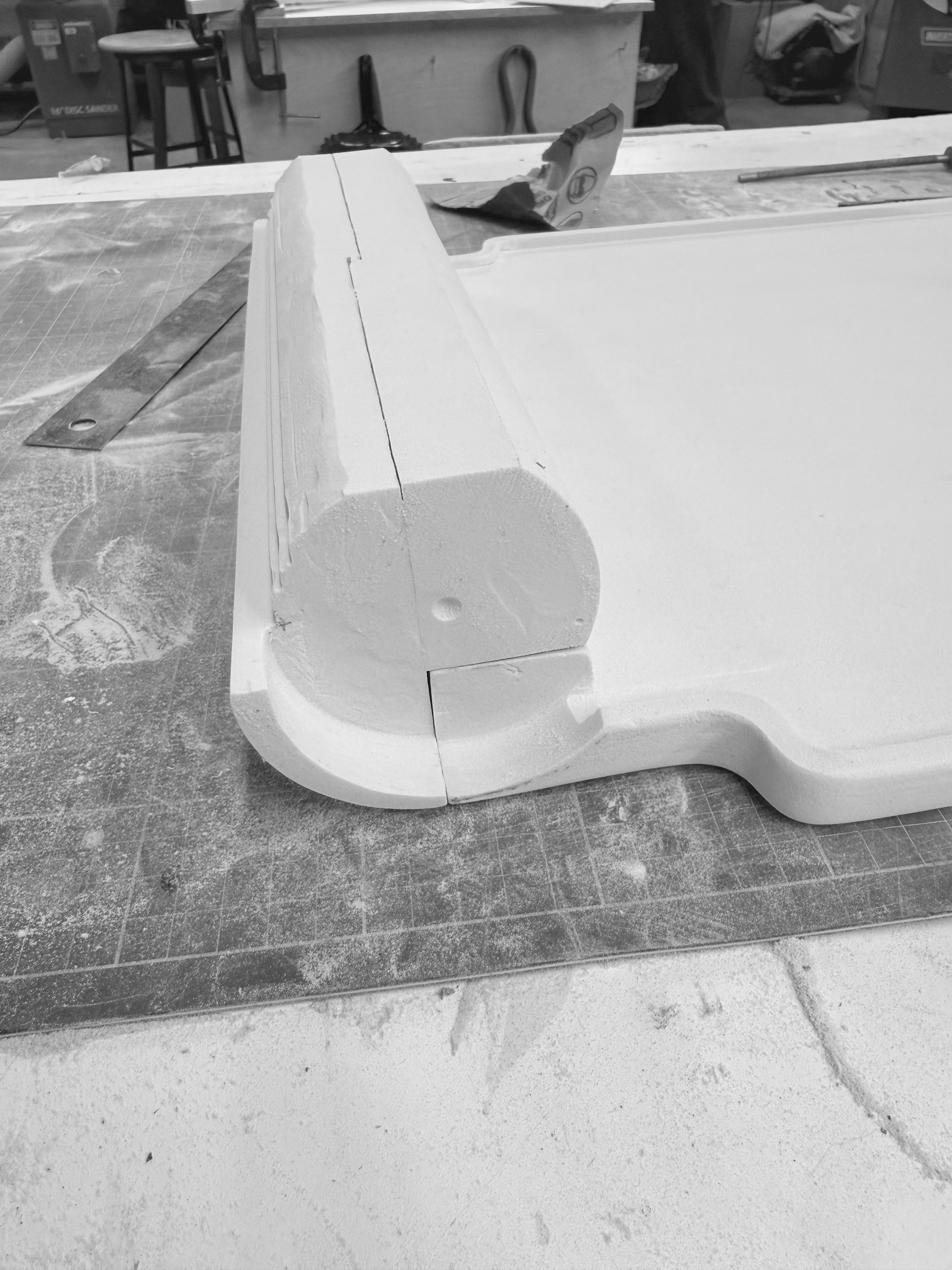
ROTATING JOINTS

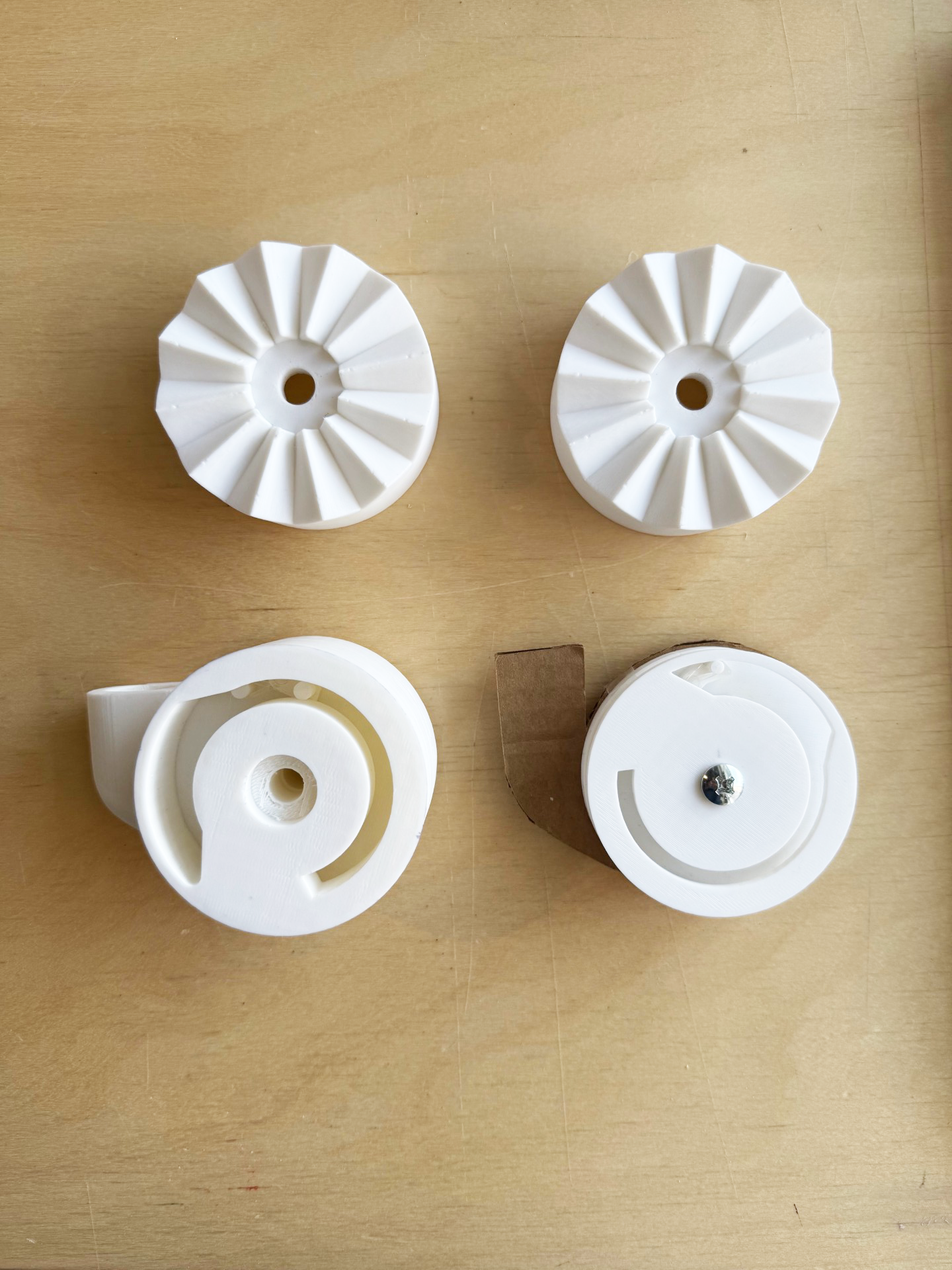
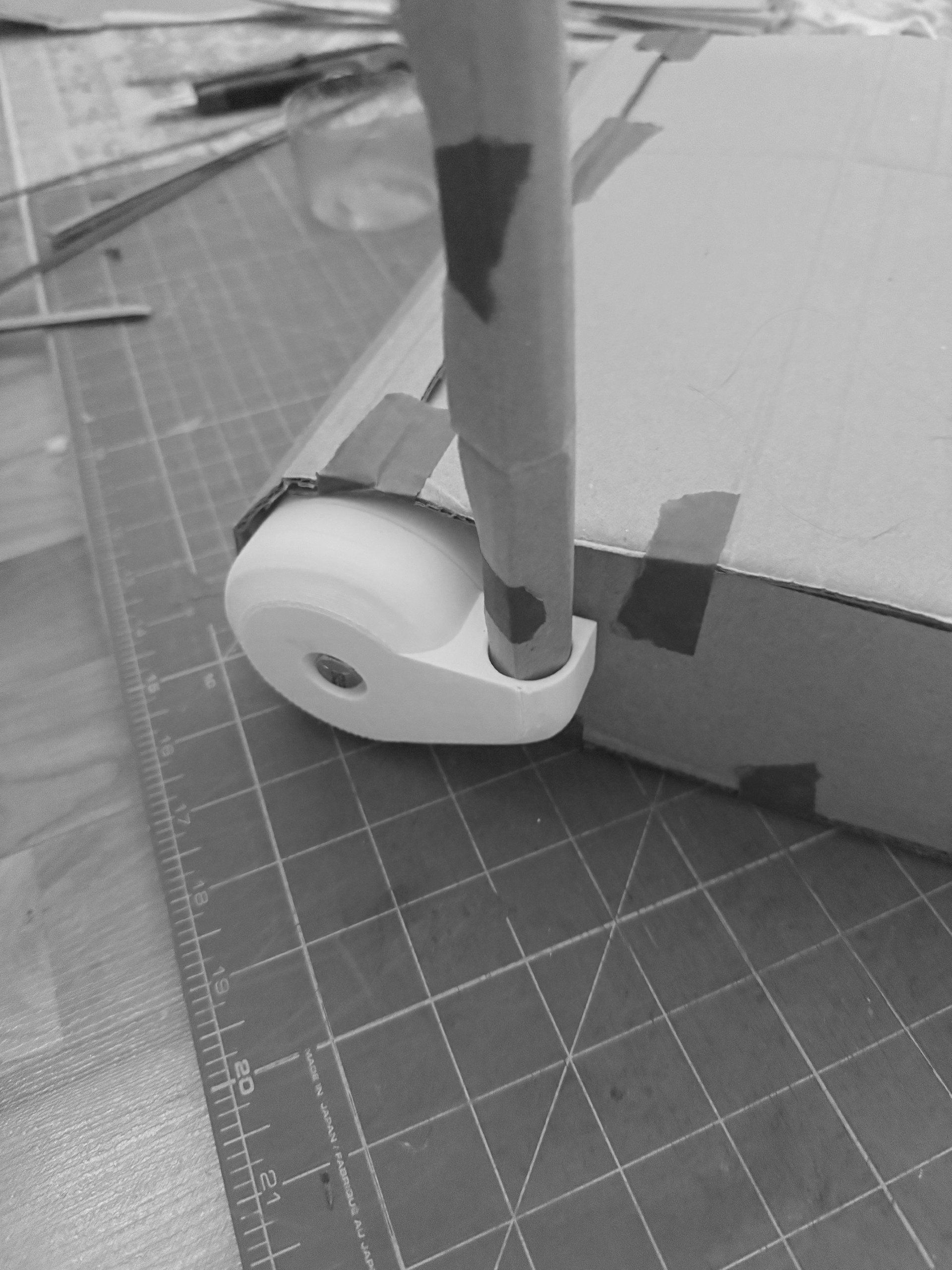
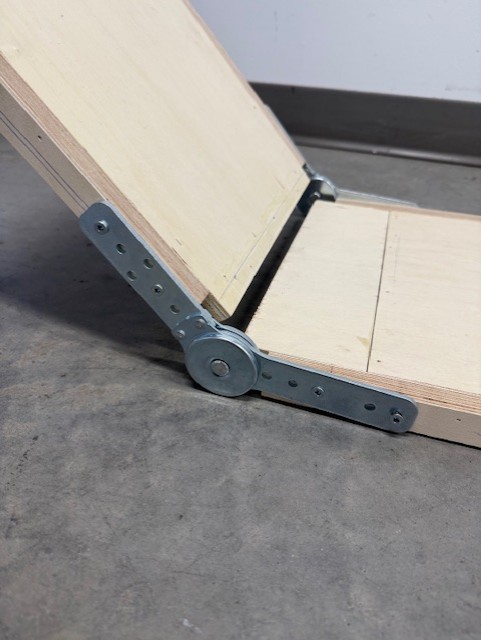
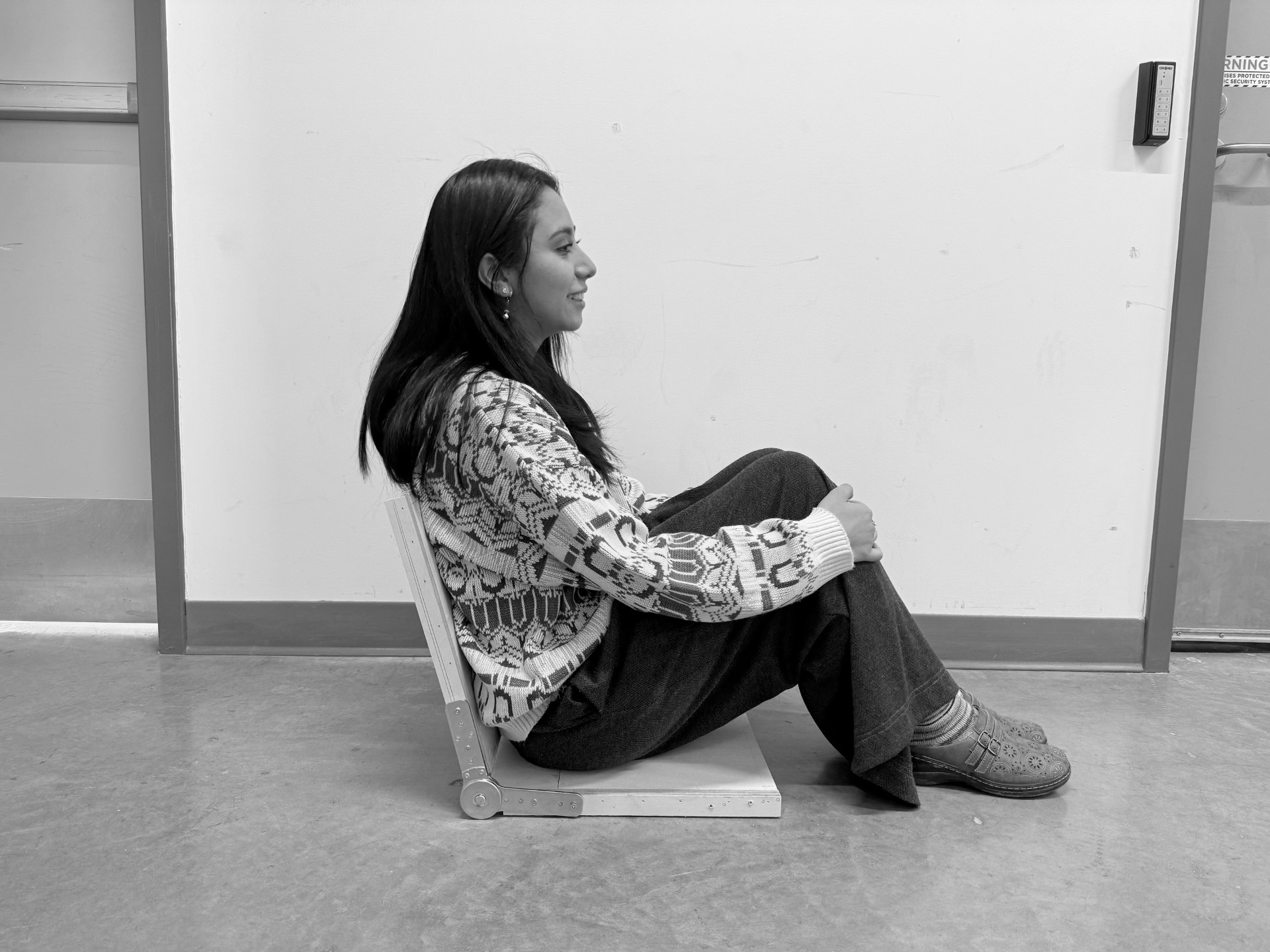
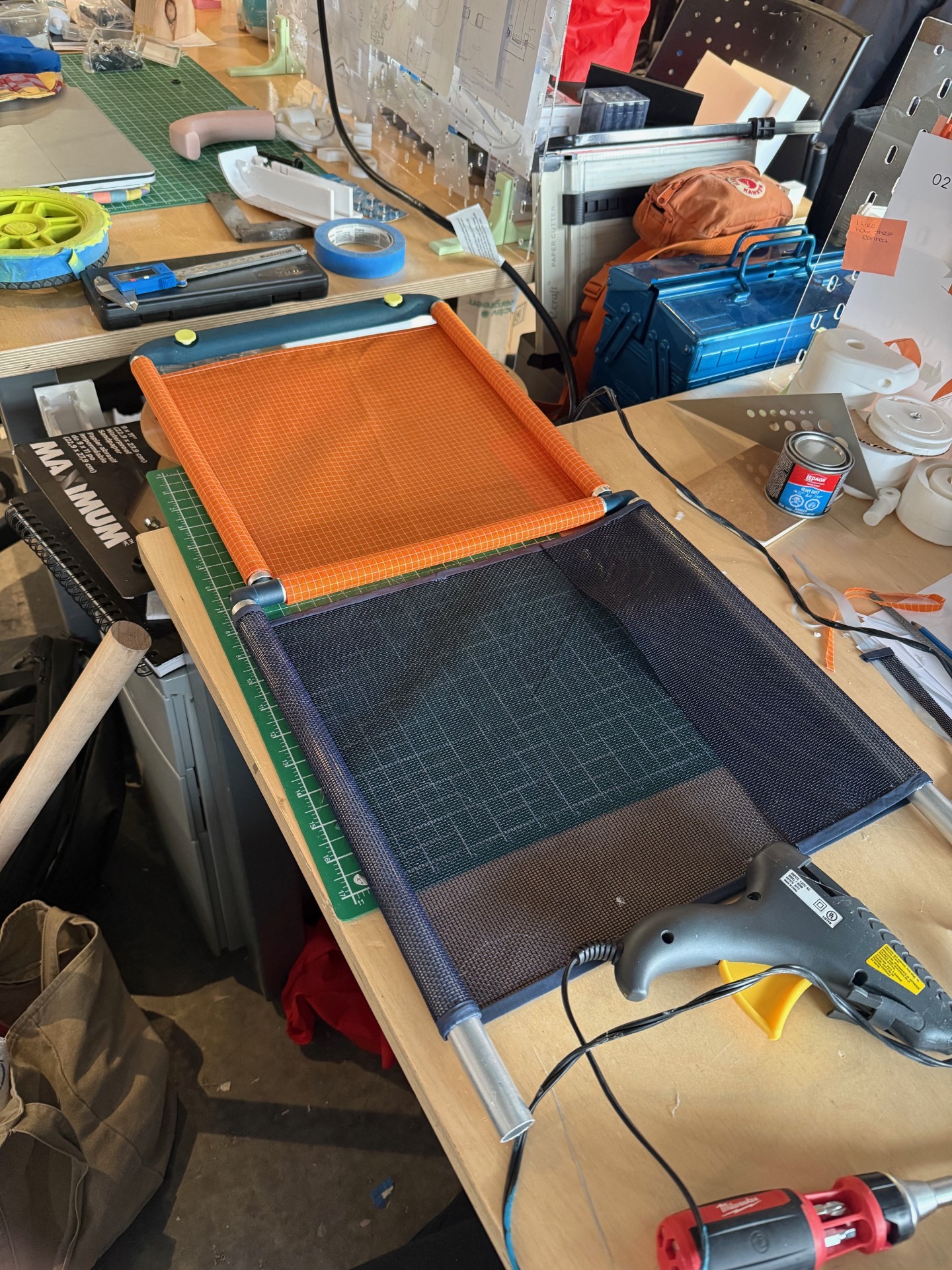
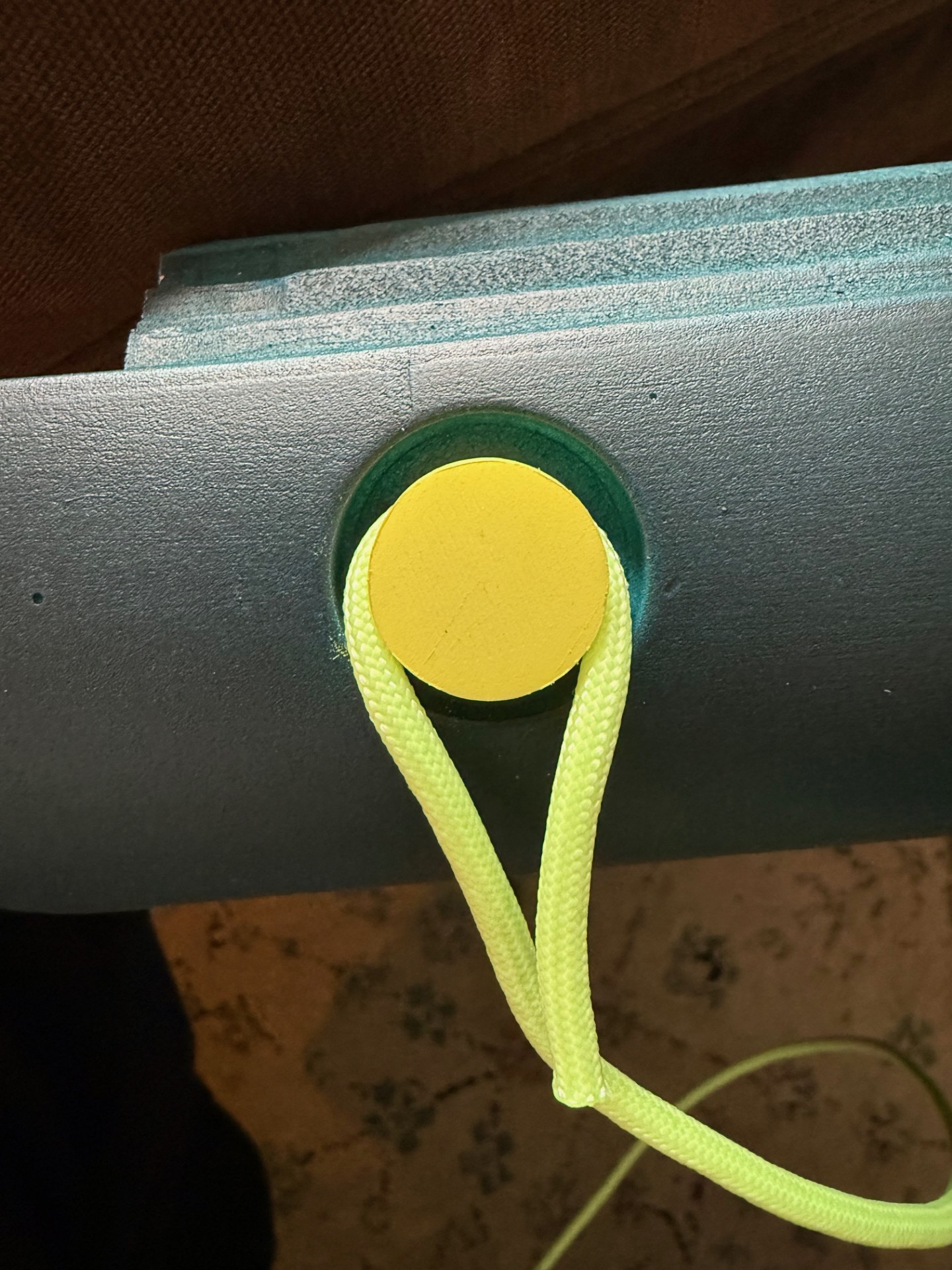
I explored and tested different kinds of joints like herth ratchet and friction. 

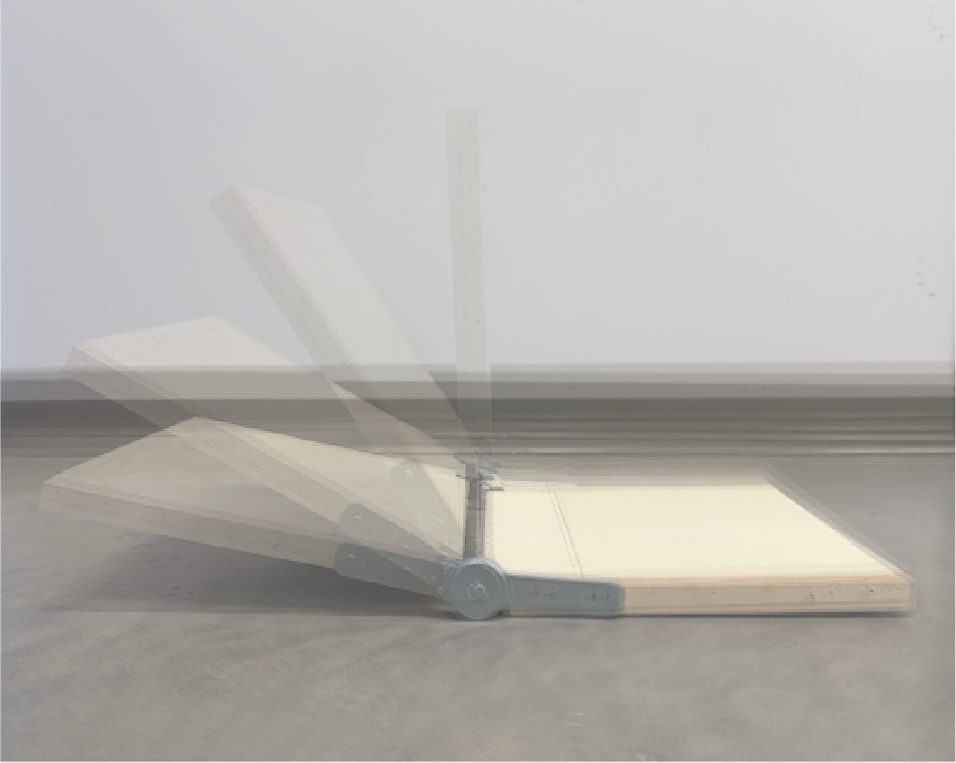
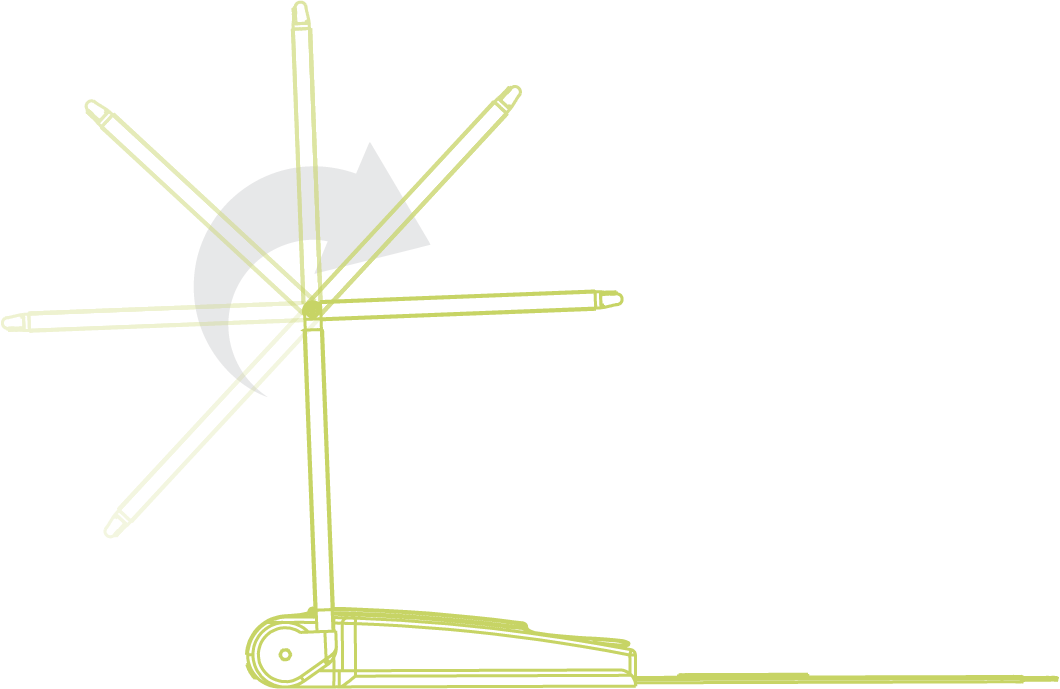
I tested an existing version of a ratchet hinge to test functionality and seat back stability at different angles. 

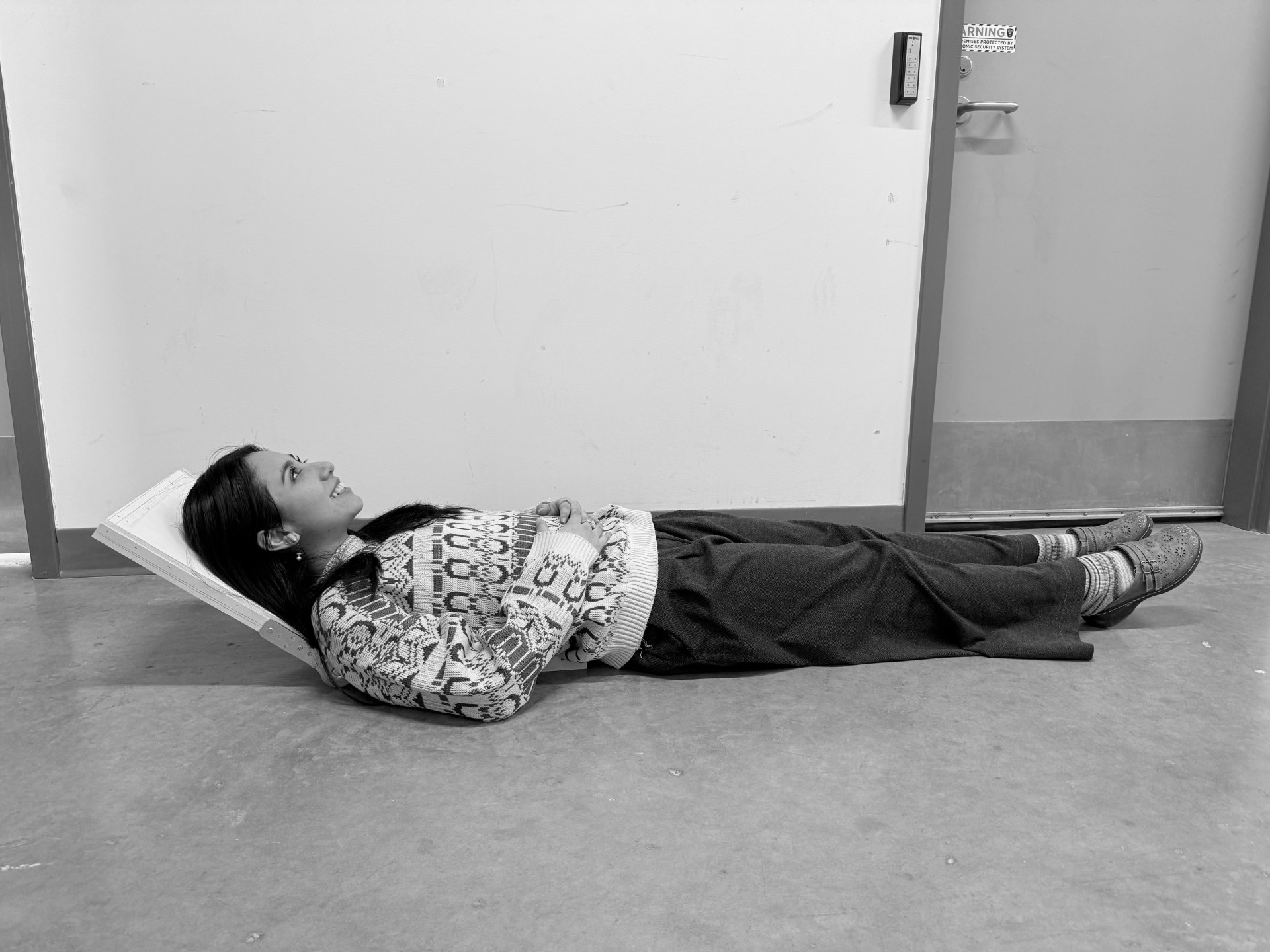
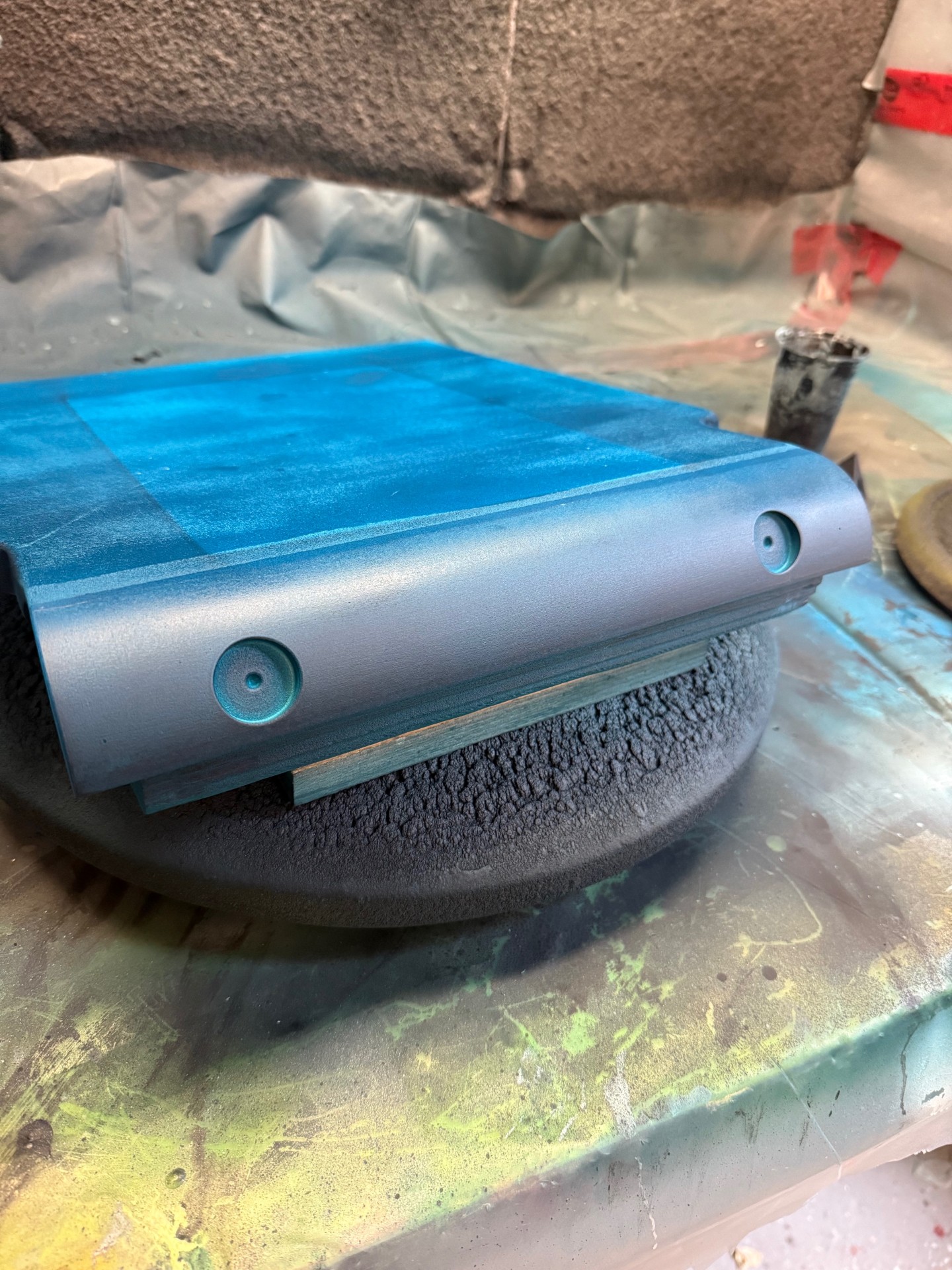
SEAT

FINAL DESIGN

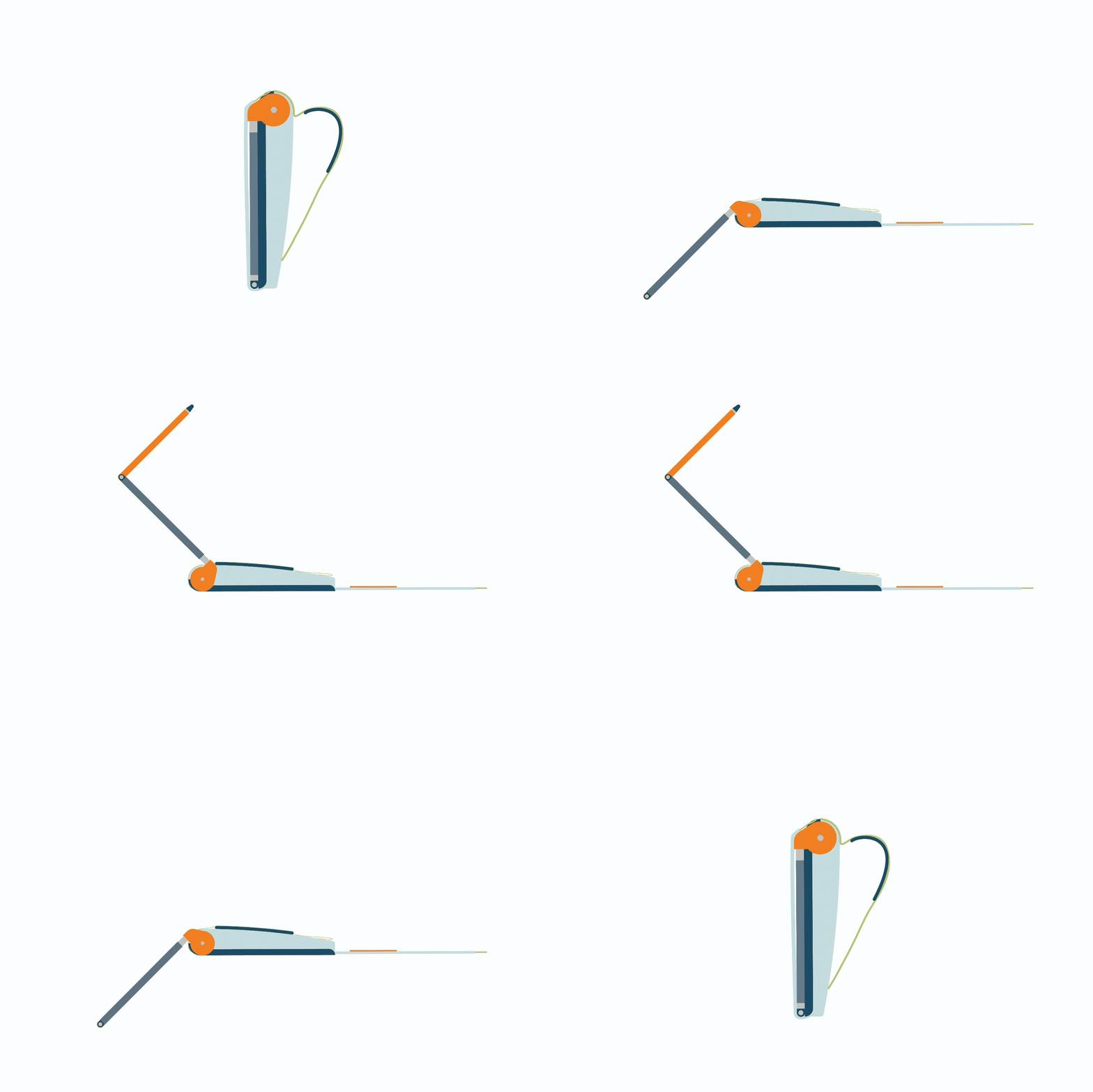
Backpack mode for easy transportation 

Unhook outer layer 

Fold out panels

Position back rest and canopy panels 

The product evolves to give children the freedom to create their own safe space. Its flexible design lets them choose how to arrange and use it, supporting independence, comfort, and different ways to interact with the outdoors.
MODES
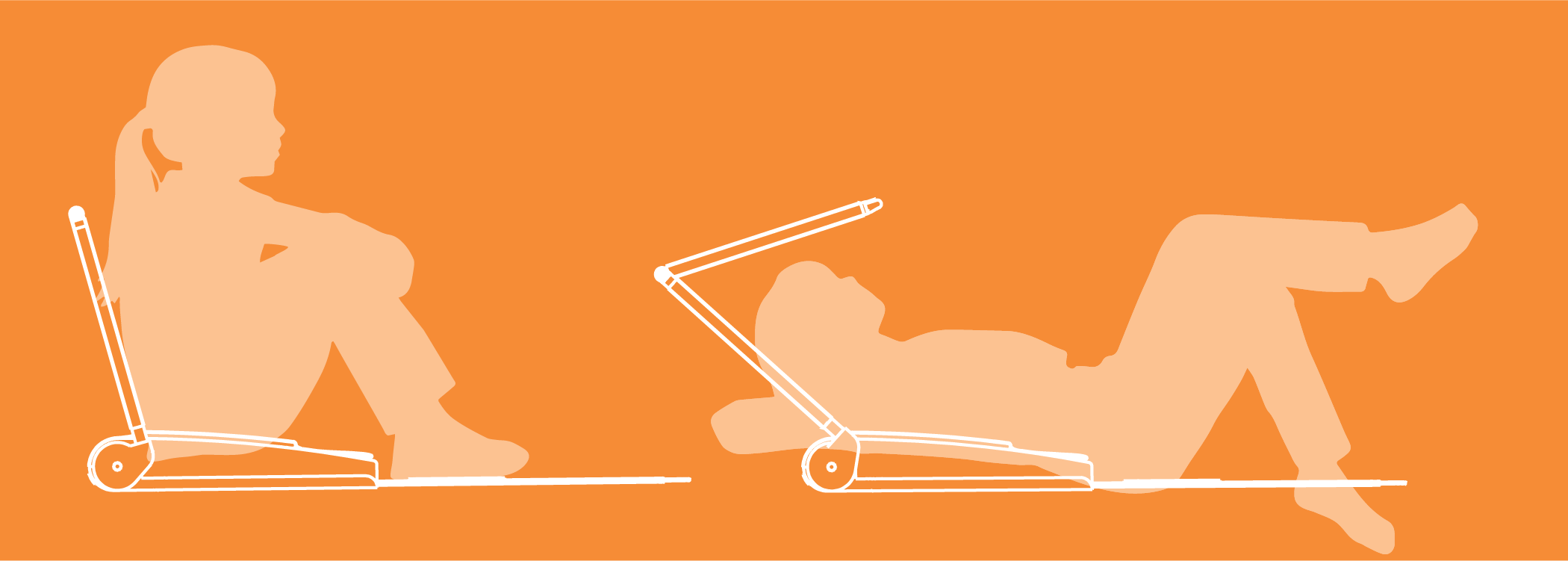
Individual: A dedicated personal zone that offers comfort, quiet, and a sense of safety, supporting reflection, emotional regulation, and independent moments within dynamic outdoor environments.
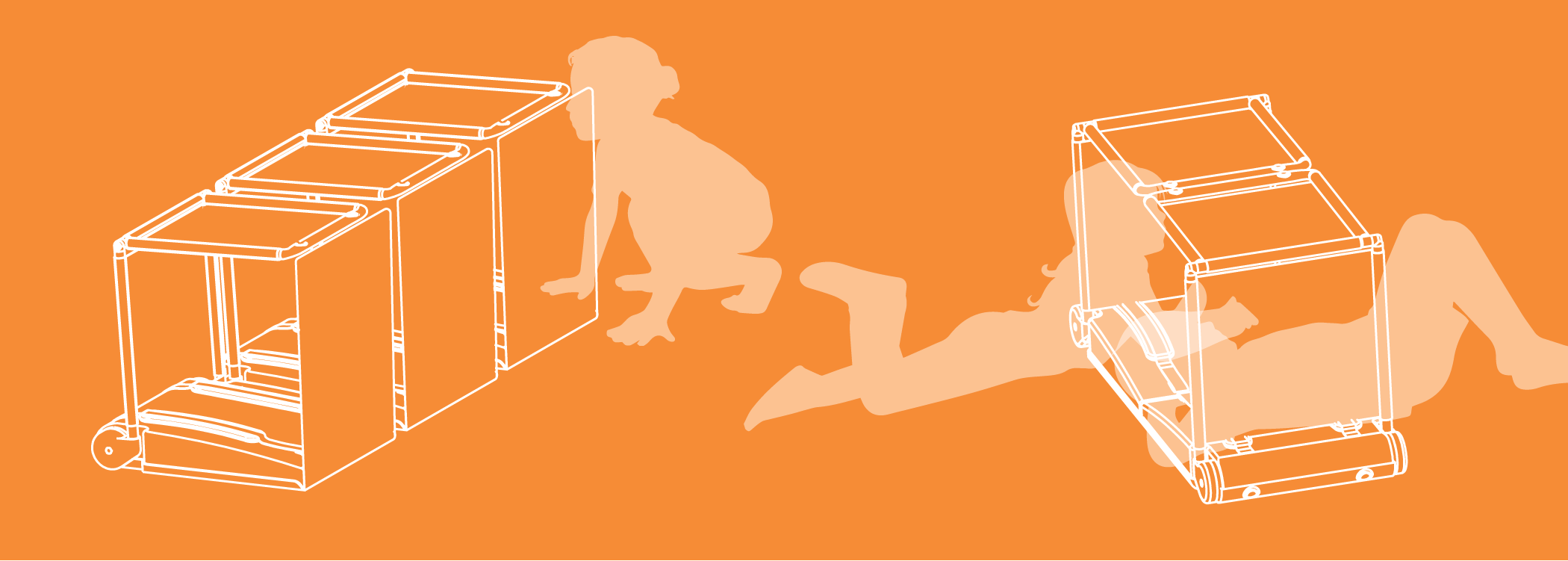
Group: An adaptable system that transforms for shared use, encouraging collaboration, discovery, and play through flexible configurations that support social interaction and group learning.
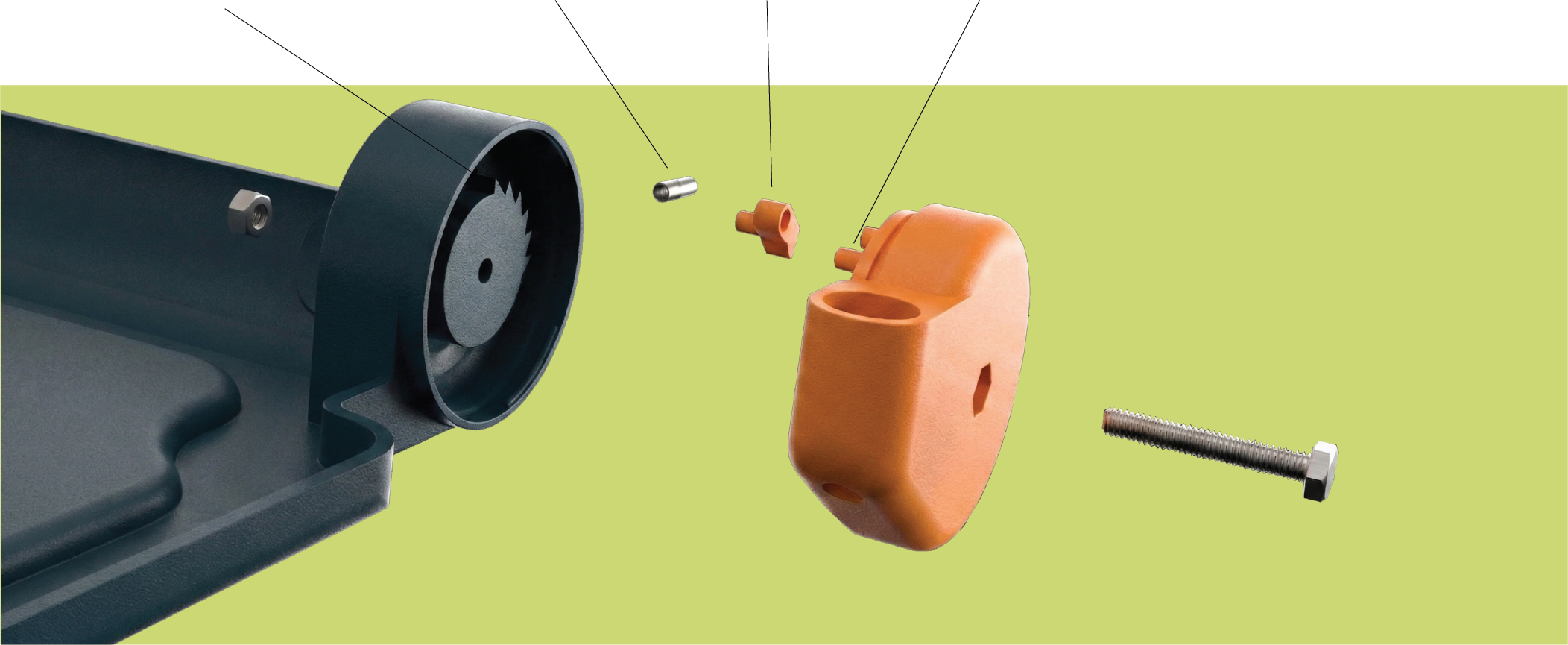
MECHANISM

Teeth 

Extension spring

Pawl

Pins

Friction hinge
Ratchet hinge
MATERIALS

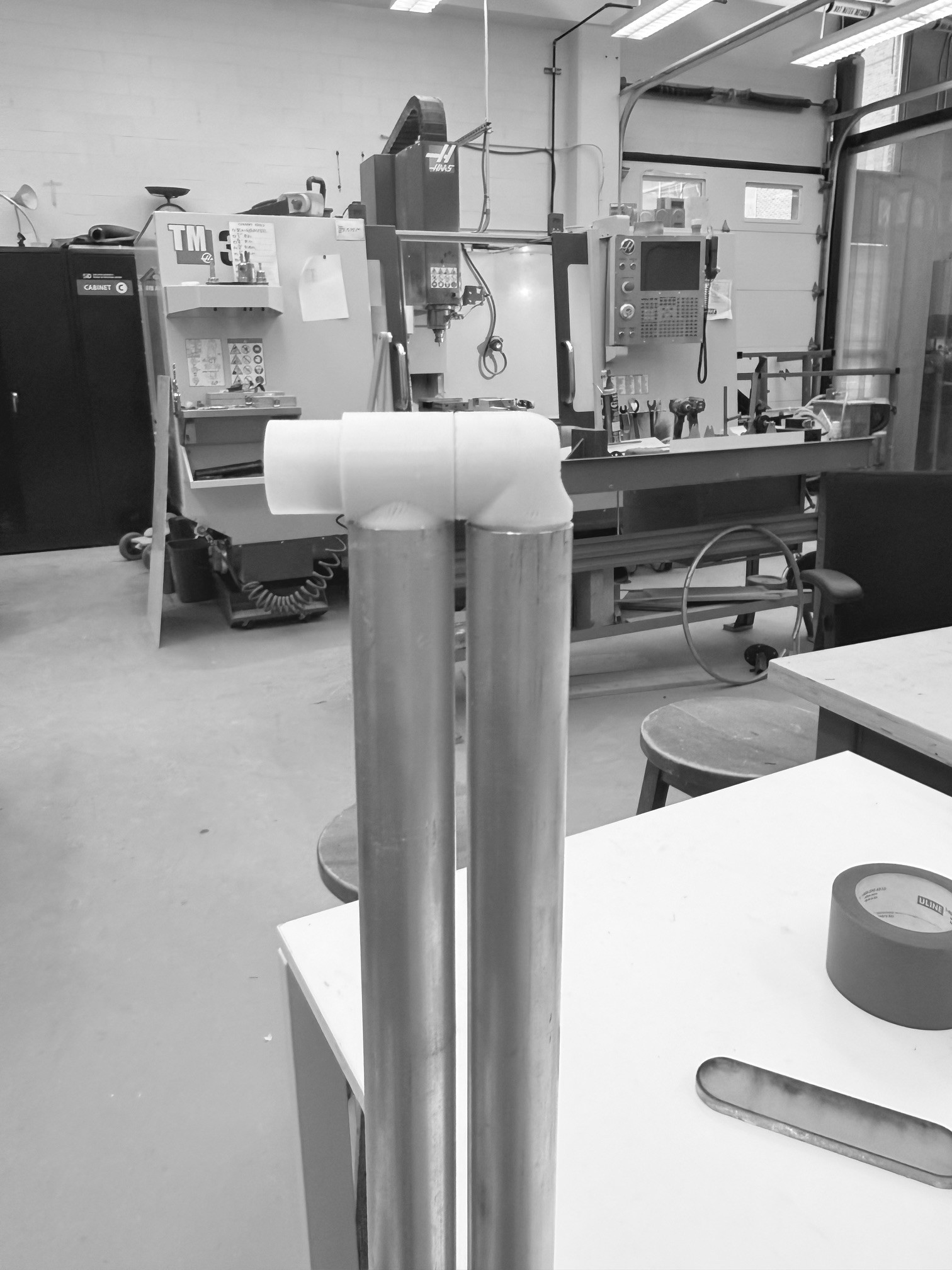
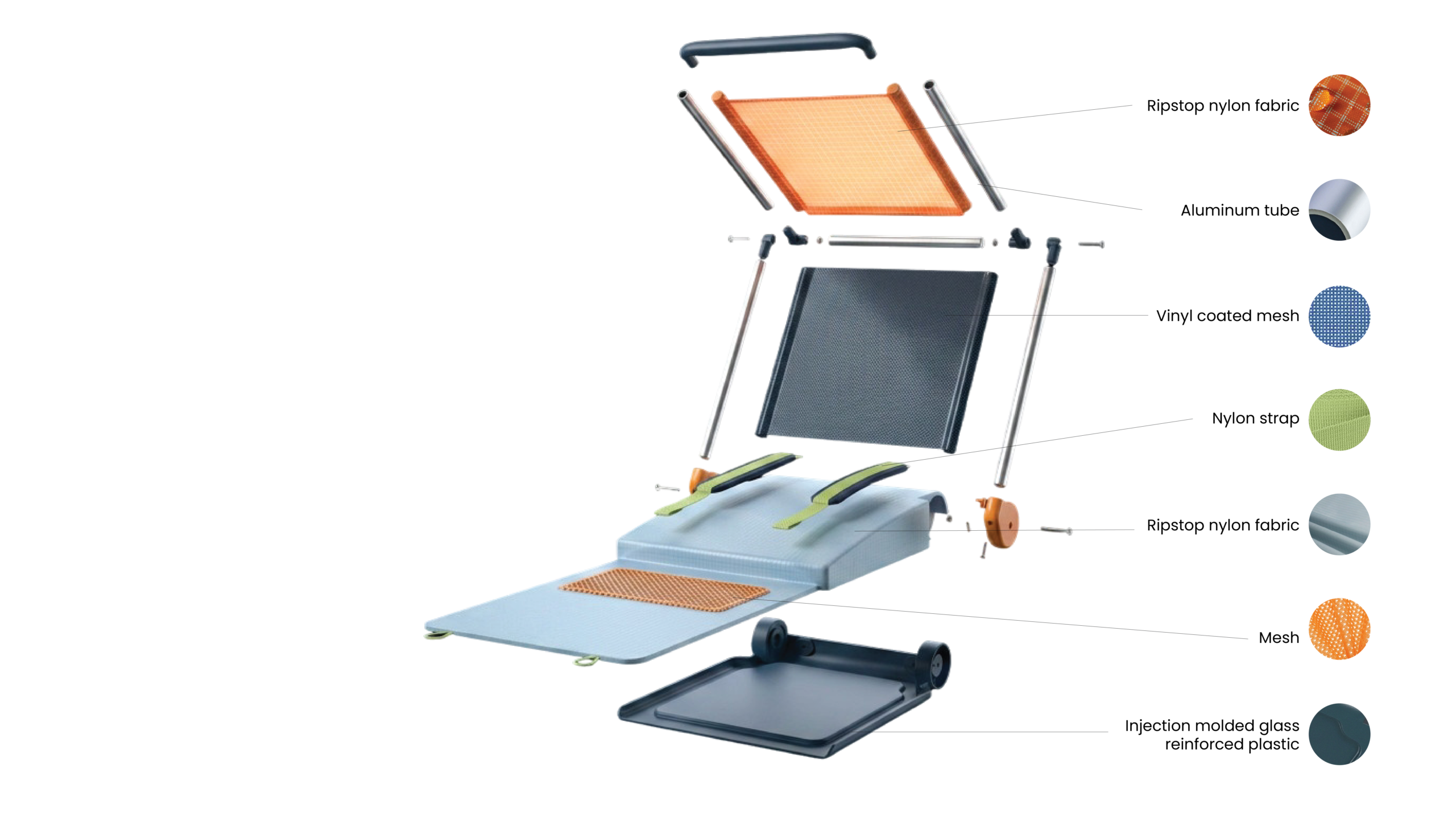
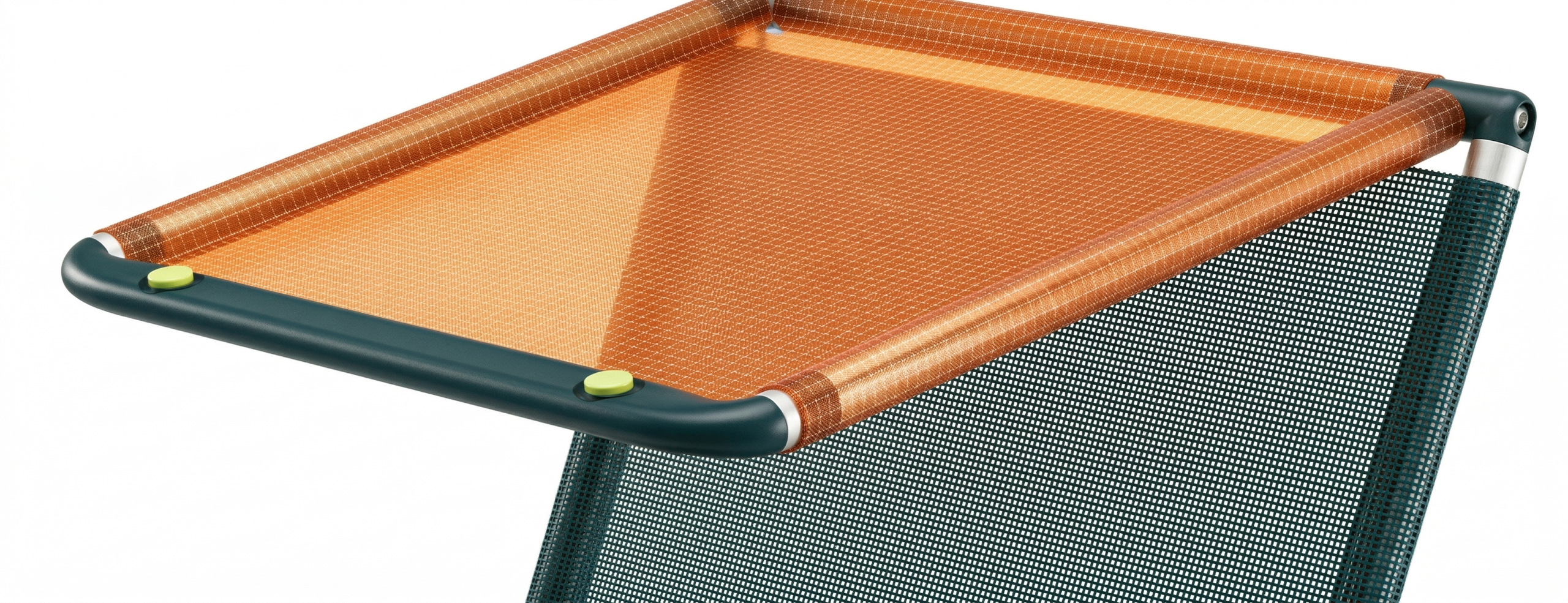
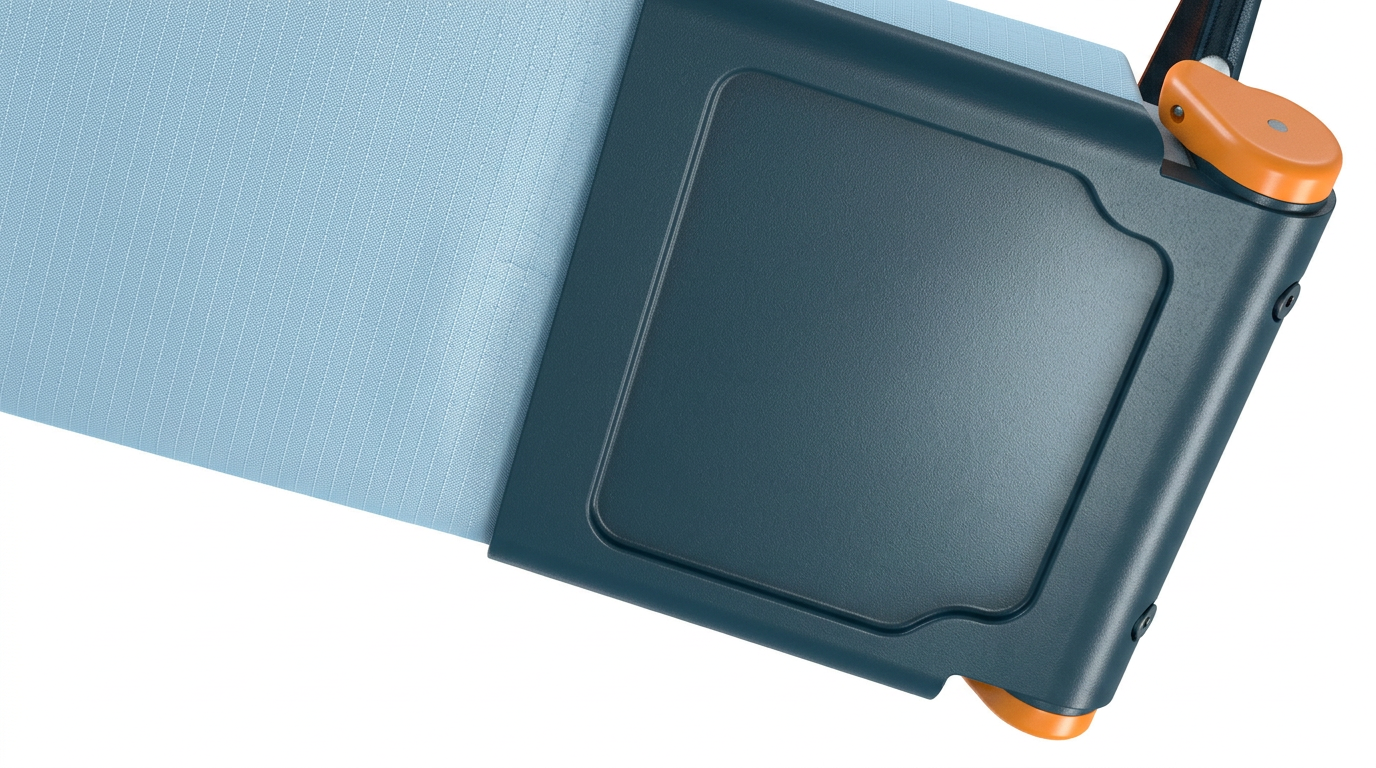
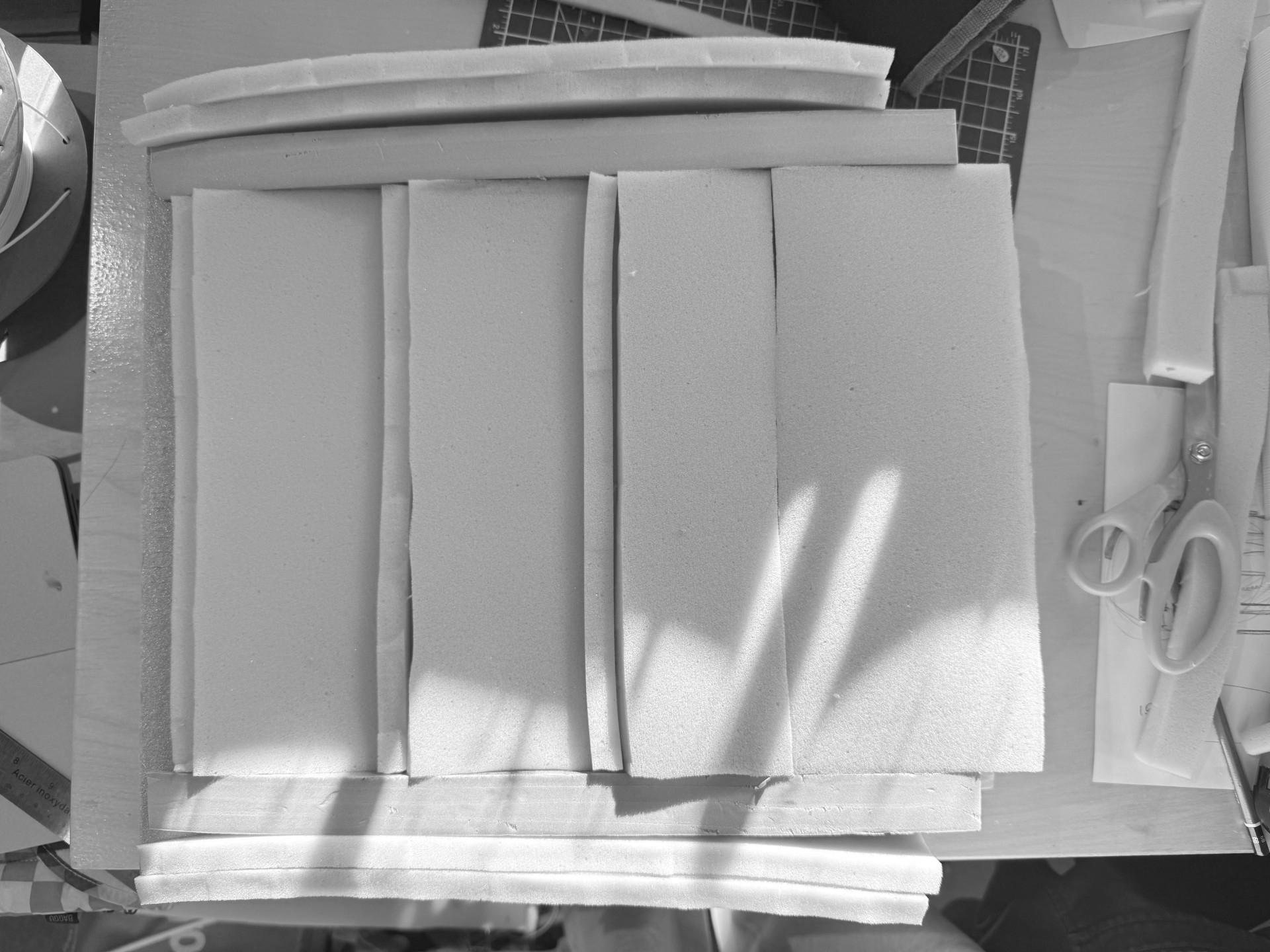
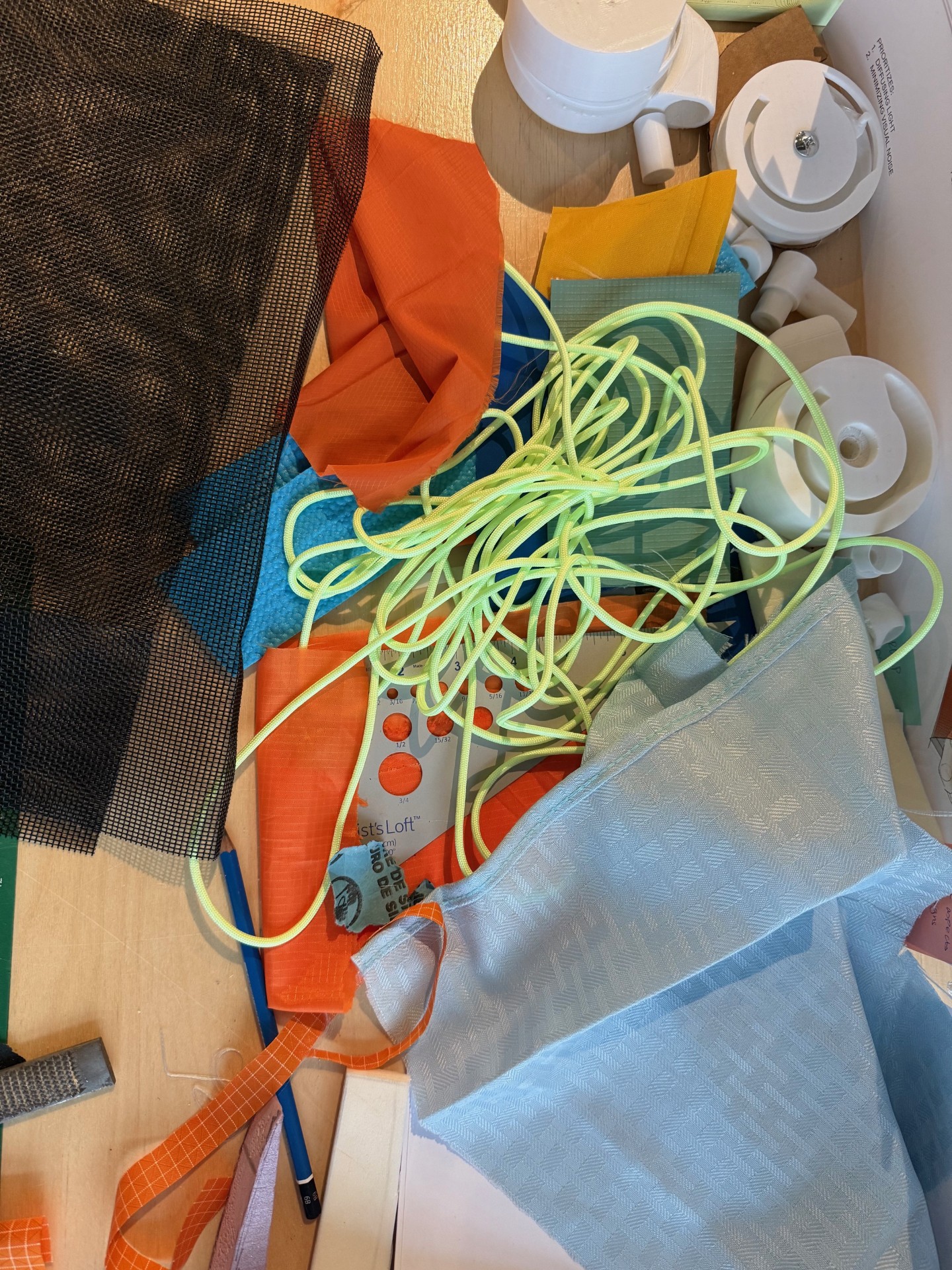
The materials were chosen to withstand outdoor weather and everyday use while keeping the product lightweight and easy for children to carry. 

LOGO & NAMING

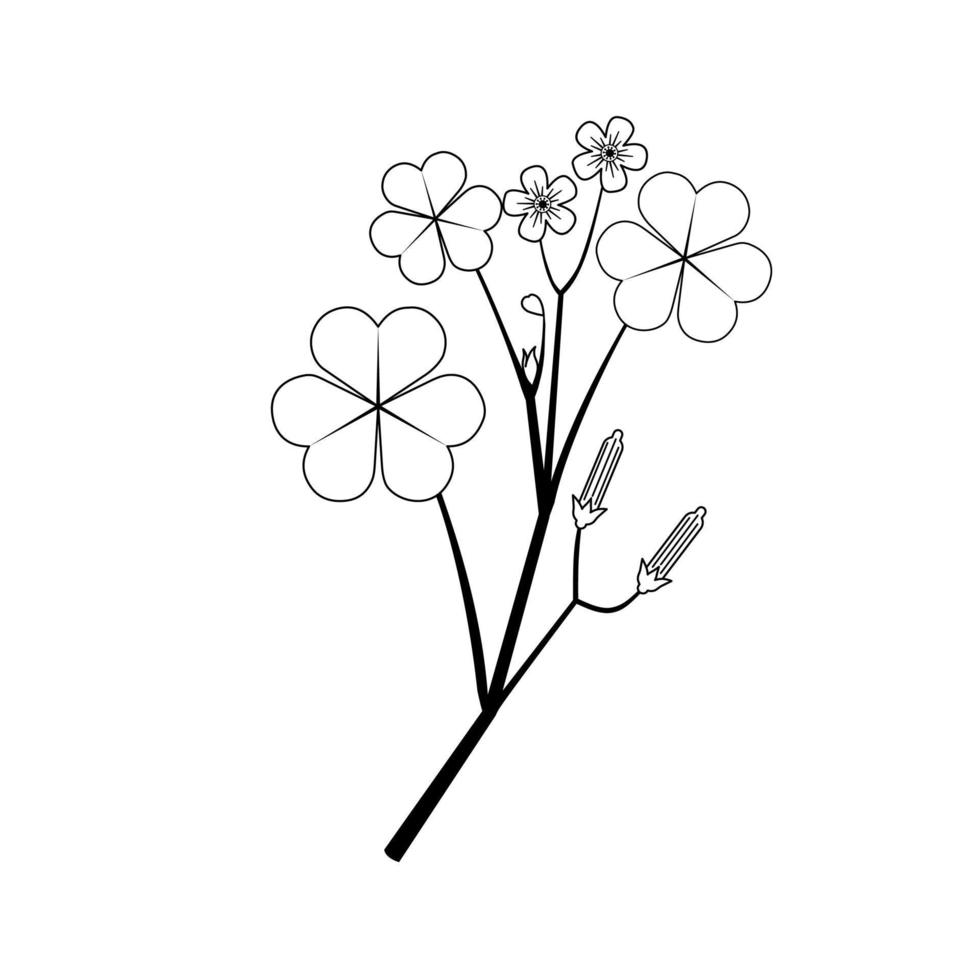
The Oxalis plant is a small, clover-like plant known for its ability to respond to light. Its leaves open wide like a canopy in bright conditions and gently fold inward in darkness, a movement called nyctinasty. This natural responsiveness makes Oxalis a strong metaphor for adaptability and comfort, shifting with its environment to protect and regulate itself. It reflects a design that opens, adjusts, and supports users based on their needs and surroundings.

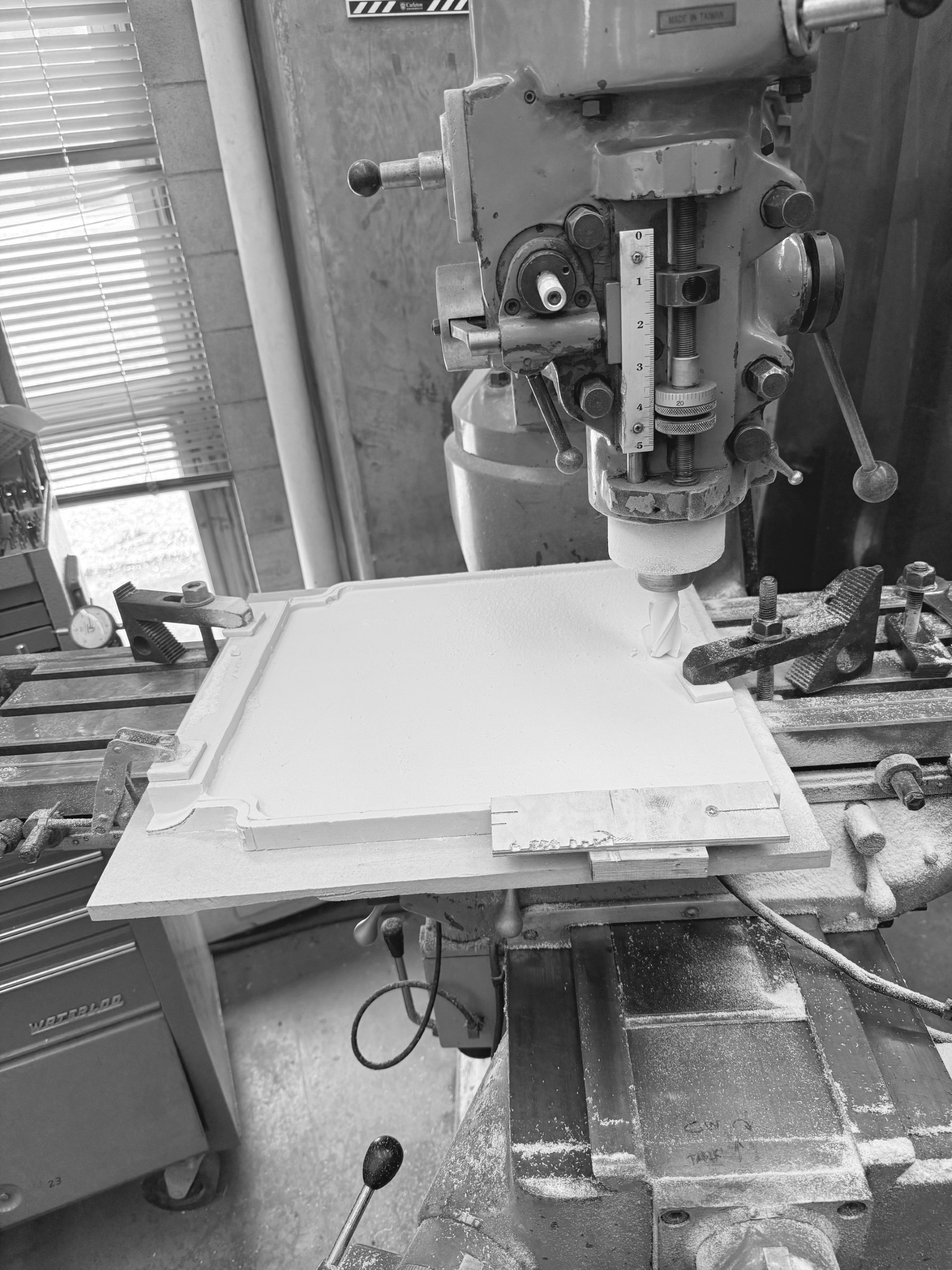
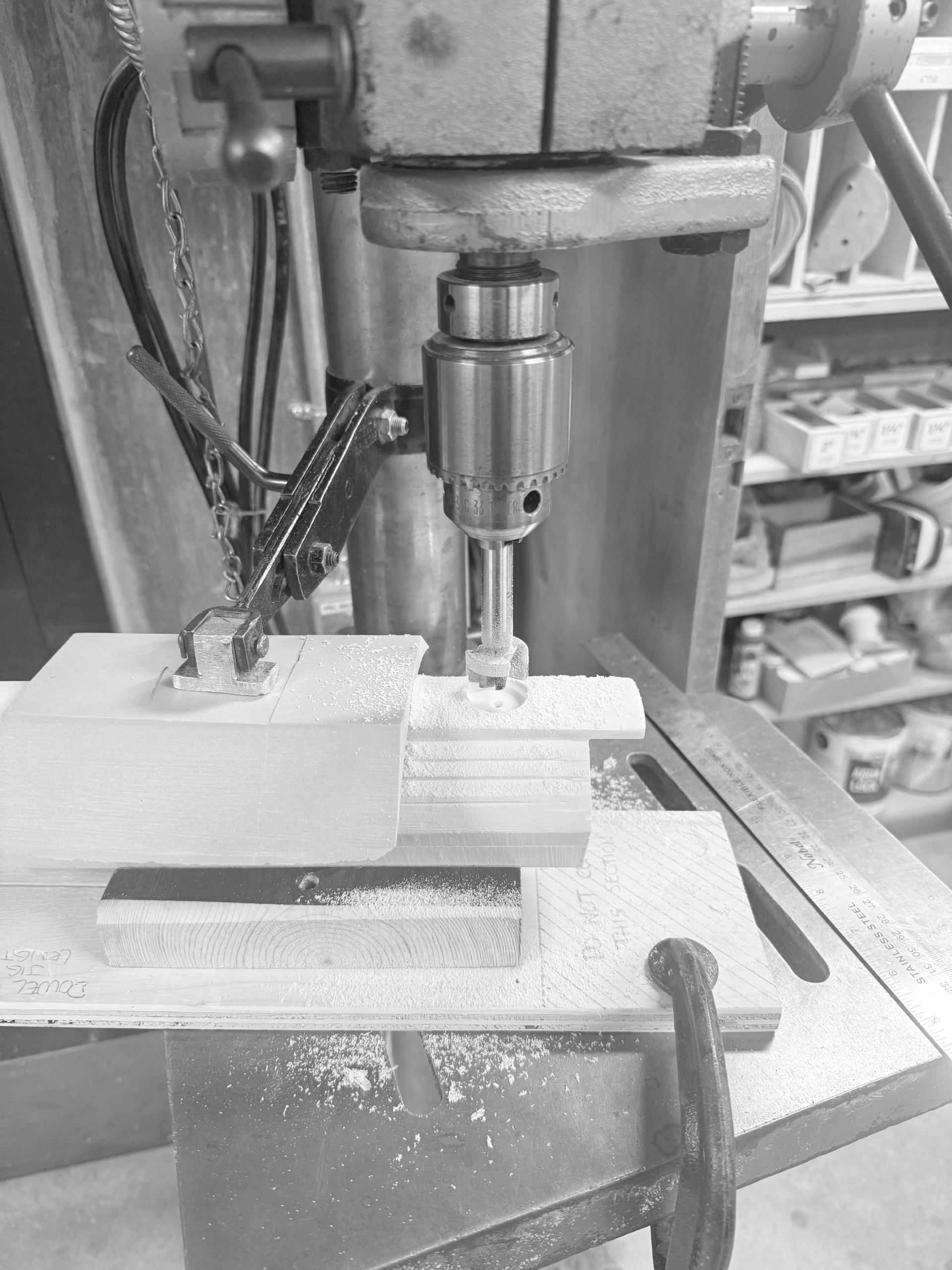
FULL SCALE MODEL